
Struggling to make sense of VAT rules and deadlines? VAT mistakes can cost your business hundreds in penalties every year. Tax Return Accountants’ ICAEW-regulated VAT specialists simplify everything from registration to reclaiming VAT. Our experts help you meet all HMRC requirements, avoid costly errors, and use the latest Making Tax Digital software. With fixed fees and tailored support for small businesses, landlords, contractors, and limited companies, you can focus on growth with confidence. By the end of this guide, you’ll know exactly how to manage your VAT obligations, who needs to register, and how to avoid the most common pitfalls.
Key Takeaways
- VAT registration threshold is £90,000 (from April 2024).
- Quarterly VAT returns are mandatory for all VAT-registered UK businesses.
- Penalties for late VAT returns use a points-based system: 4 points triggers a £200 penalty.
- Flat Rate Scheme may suit businesses under £150,000 turnover.
- Professional VAT accountants help avoid costly errors and missed deadlines.
Why Trust This Guide?
Thousands of UK businesses rely on Tax Return Accountants for clear, up-to-date VAT and tax compliance advice:
- ICAEW regulated and AAT accredited
- 15+ years supporting UK businesses
- 500+ UK businesses supported since 2009
- Rated 4.9/5 on Google Reviews
- Fixed fees from £7.50/month
- Last reviewed: July 2026.
VAT Specialist Accountants: Full UK Guide for
This article explains what VAT specialist accountants do, who needs VAT advice for small businesses UK, how to register, reclaim VAT, and why professional support is essential for compliance and efficiency.
Need tailored VAT advice or help with quarterly returns? Call 0116 4030595 or email info@taxreturnaccountants.uk for a free, no-obligation consultation.
What Do VAT Specialist Accountants Do?
VAT can be a minefield for small businesses. A VAT specialist accountant provides VAT advice for small businesses UK, guiding you through registration, quarterly filings, and reclaiming VAT on eligible purchases. Their expertise helps you avoid common mistakes—like missing deadlines or claiming VAT on non-qualifying expenses—that can quickly lead to penalties.
Compliance is not optional. Since the introduction of Making Tax Digital VAT, all VAT-registered businesses must use compatible software and keep digital records. Accountants ensure your submissions are correct, on time, and make use of all possible schemes, such as the Flat Rate Scheme, when suitable.
For example, picture a Nottingham contractor who managed their VAT manually and missed a quarterly deadline. This resulted in their fourth penalty point and a £200 HMRC fine. With specialist support, these risks are minimised, and eligible VAT reclaims are maximised—often saving more than the accountant’s annual fee.
Quick Tip: If your turnover is close to the £90,000 threshold, start tracking VATable sales monthly. Early planning prevents rushed registration and potential penalties.
Unlike most generalist firms, Tax Return Accountants proactively monitor your VAT position and provide reminders before each deadline. This helps you focus on running your business, not chasing paperwork.
Comprehensive VAT Advice for Small Businesses
VAT advice for small businesses UK includes guidance on when to register, which expenses can be reclaimed, and how to use schemes like the Flat Rate Scheme. Tailored advice is essential, as the right approach varies by business type and sector.
VAT Registration and Compliance
Specialist accountants handle the full VAT registration process, ensuring you submit the correct documents and avoid common pitfalls, such as missing the 30-day registration window or misunderstanding the types of income that count towards the threshold.
Quarterly VAT Returns Explained
VAT returns must be filed quarterly—March, June, September, and December. Late or inaccurate submissions result in penalty points and potential fines. Your accountant ensures every box is completed correctly and all eligible VAT is reclaimed.
What is Making Tax Digital?
Making Tax Digital is a UK government initiative requiring VAT-registered businesses to keep digital records and submit VAT returns using HMRC-approved software.
VAT Registration and Returns: What Every UK Business Needs to Know
VAT registration and quarterly submissions are non-negotiable for businesses over the £90,000 threshold.
- VAT registration threshold rose to £90,000 in April 2024.
- You must register within 30 days of exceeding the threshold.
- Quarterly VAT returns are due 1 month and 7 days after each quarter end.
- Penalties use a points-based system: 4 late returns = £200 fine.
- MTD for VAT is mandatory for all VAT-registered businesses.
Understanding these requirements is critical to avoid unnecessary penalties and cashflow shocks.
Here is a practical comparison of VAT deadlines, registration steps, and penalties for 2026/27:
| VAT Key Area | Requirement | Deadline | Penalty |
|---|---|---|---|
| Registration | Mandatory if turnover > £90,000 | Within 30 days of passing threshold | £200 per 4 missed returns |
| Quarterly VAT Return | Digital filing via MTD software | 1 month + 7 days after quarter end | 1 penalty point per late return |
| Late Payment | VAT payment due with return | Same as return deadline | 2% after 15 days, 4% after 30 days |
| Flat Rate Scheme | Optional if turnover < £150,000 | Opt in at registration or later | N/A |
Missing a deadline can trigger both a penalty point and immediate cash penalties. For example, a Leicester ecommerce business that registered late in 2025 faced an instant £200 fine after four missed deadlines, plus 4% late payment interest on overdue VAT. Early registration and quarterly reminders from a VAT returns accountant UK prevent these costly errors.
Quick Tip: Always check if your business qualifies for the Flat Rate Scheme. It simplifies VAT for businesses under £150,000 turnover and can reduce admin time.
For detailed, step-by-step help with registration, see our Making Tax Digital Service.
DIY vs Professional VAT Returns: What’s the Real Cost?
| Factor | DIY | Professional Accountant |
|---|---|---|
| Cost | £0-£50 (time only) | £25-£100/month |
| Time | 2-5 hours/quarter | 30 mins/quarter (review only) |
| Error Risk | High | Low |
| Tax Planning | None | Included |
Many business owners start by handling VAT themselves. While this can save on fees, it dramatically increases the risk of errors. If you miss a reclaim, file late, or use the wrong VAT code, HMRC penalties can quickly outweigh any savings.
Professional accountants offer more than just compliance. They spot missed VAT claims, advise on the best VAT scheme, and ensure your records are MTD-compliant. For example, a Manchester freelancer who moved from DIY to professional support in 2026 recovered £1,200 in missed VAT claims and avoided a likely penalty for late filing.
- DIY VAT returns often overlook allowable input VAT—especially for capital purchases, software, and mixed-use expenses.
- Accountants handle all submissions, provide quarterly reminders, and answer HMRC queries on your behalf.
- Fees for an affordable VAT returns accountant UK start at just £25/month, often less than the cost of a single penalty.
Quick Tip: If you’ve missed a VAT reclaim or submitted a late return, you can amend the next return or ask your accountant to liaise with HMRC to resolve the issue.
For a full breakdown of accountant fees and packages, visit our Accountant Pricing page.
How Do I Reclaim VAT in the UK? Step-by-Step Guidance
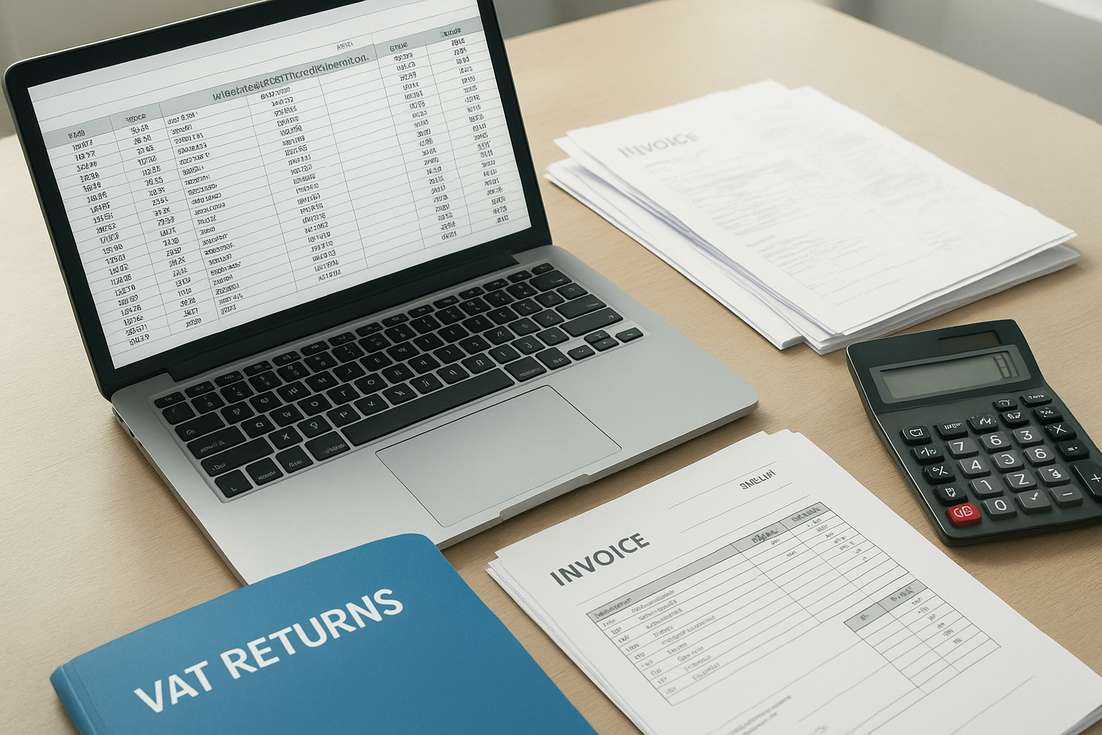
Imagine a Birmingham sole trader who recently registered for VAT and wants to reclaim VAT on a new laptop, office rent, and advertising costs. They’re unsure which expenses qualify and how to record each invoice correctly.
- To reclaim VAT, you must have a valid VAT invoice showing your business as the purchaser and the supplier’s VAT number.
- Eligible expenses include business equipment, stock, rent (if VAT is charged), and professional fees.
- Some costs—like client entertainment, most cars, or non-business purchases—are not reclaimable.
- Submit your VAT reclaim as part of your quarterly VAT return using MTD-compliant software.
- If you make a mistake, you can usually correct it in your next return or by contacting HMRC directly.
Quick Tip: Keep a digital copy of every VAT invoice. HMRC can request proof up to 6 years later, and missing documentation means you lose the reclaim.
Many businesses miss out on VAT reclaims for capital purchases simply because they don’t know the rule: you can reclaim VAT on assets bought up to 4 years before registration, as long as they’re still in use for your VAT-registered business.
For bookkeeping support and digital record-keeping, see our Bookkeeping Service.
VAT for Freelancers, Landlords, Contractors & Limited Companies: Who Needs to Register?
VAT rules are not one-size-fits-all. Whether you’re a freelancer, landlord, contractor, or run a limited company, your VAT obligations differ. For freelancers and sole traders, the question “do sole traders need to register for VAT?” comes up often. The answer: only if your VAT-taxable turnover exceeds £90,000 in a rolling 12-month period.
Landlords rarely need to register unless they provide additional VATable services, such as cleaning or furnished holiday lets. However, VAT for landlords UK can be complex if you operate serviced accommodation or mixed-use properties. Limited company VAT guidance is essential for directors, as errors in reclaiming or charging VAT can lead to both penalties and lost cashflow.
Contractor VAT accounting UK often involves the Flat Rate Scheme, which can simplify reporting but may not always be the most tax-efficient option—especially for those with significant input VAT to reclaim.
- Freelancers and sole traders: Register if turnover exceeds £90,000; consider the Flat Rate Scheme if admin is a burden.
- Landlords: Only register for VAT if supplying VATable services, not just rent.
- Limited companies: Must register and file quarterly if over the threshold; tailored advice is crucial for group structures.
- Contractors: Flat Rate Scheme can reduce admin but may cost more if you have high expenses.
- All types: Monitor turnover monthly, not just at year-end, to avoid missing the registration window.
For example, a Leicester landlord running a furnished holiday let registered for VAT in 2026 and reclaimed £2,100 on refurbishment costs—something many landlords miss. This improved cashflow and allowed for more investment in the property.
Warning: If you register late, HMRC can backdate your liability and issue penalties—even if you didn’t realise you’d exceeded the threshold.
For sector-specific support, see our Landlord Accountants and Freelance Accountants pages.
VAT Compliance Services and Making Tax Digital (MTD) in 2026/27
Digital record-keeping is now the law for all VAT-registered businesses. Making Tax Digital for VAT is mandatory, regardless of turnover, as of 2026/27. This means you must use HMRC-approved software—such as Xero, QuickBooks, FreeAgent, or Sage Accounting—to record all sales and purchases and submit VAT returns electronically.
Many business owners assume that simply using a spreadsheet is enough. In reality, HMRC requires digital links between your records and the VAT return. Copy-pasting figures or manual entry is no longer compliant and can trigger an enquiry or penalty.
For example, in 2026 a Nottingham healthcare provider was investigated by HMRC after submitting VAT returns using spreadsheets. With professional help, they migrated to Xero, corrected digital records, and avoided a potential £400 fine.
What is VAT Compliance?
VAT compliance means meeting all HMRC rules for VAT registration, digital record-keeping, quarterly submissions, and using approved software.
Choosing the right VAT compliance services UK is critical. Accountants can recommend the best MTD-compatible software, set up digital processes, and provide ongoing support to keep your business audit-ready.
Quick Tip: If you’re still using spreadsheets, move to MTD-compatible software now. HMRC’s grace period for non-digital records has ended.
For help going digital, see our Making Tax Digital Service.
How to Find an Accountant Near You: Local VAT Experts in Leicester, London, Birmingham & Beyond
Looking for an accountant near me who understands your city’s business scene? Local knowledge can make a real difference—especially for region-specific VAT issues or networking opportunities.
- Local accountants know city-specific rules and industry trends.
- Face-to-face support is available in Leicester, London, Birmingham, Manchester, Nottingham, and across the East Midlands.
- Always verify your accountant’s ICAEW or AAT registration, HMRC agent status, and Google reviews.
- Check for professional indemnity insurance and a clear engagement letter before signing up.
- Ask about their experience with MTD for VAT and your sector.
Here’s how online and local accountants compare for VAT support:
| Factor | Online Accountant | Local Accountant |
|---|---|---|
| Cost | Lower | Higher |
| Meetings | Virtual | Face-to-face |
| Availability | Flexible | Office hours |
| Nationwide Support | Yes | Limited |
For example, a Manchester construction firm switched to a local VAT accountant in 2026 after struggling with remote support. The result: improved response times, tailored advice on local VAT issues, and £1,000 saved in missed VAT reclaims within a year.
Tax Return Accountants, 6 Egginton Street, Leicester, LE5 5BA, 0116 4030595, offers city-specific VAT support across the UK. To verify credentials, see the table below.
Specialist VAT Support Across Industries and Software Platforms
Imagine a healthcare contractor in London juggling NHS contracts, private work, and equipment purchases. Their VAT needs are very different from an ecommerce seller or taxi driver. That’s why industry-specific VAT guidance is so valuable.
At Tax Return Accountants, we provide tailored VAT advice for:
- Contractors: CIS, Flat Rate Scheme, reverse charge rules
- Freelancers: simplified VAT, digital tools for expense tracking
- Landlords: VAT on furnished holiday lets, capital allowances
- Ecommerce: cross-border VAT, platform reporting
- Construction: VAT reverse charge, project-based accounting
- Healthcare: mixed-exemption, NHS/private split
- Taxi drivers: simplified VAT, input claims on vehicles
Software expertise matters too. We integrate Xero, QuickBooks, FreeAgent, and Sage Accounting for seamless, MTD-compliant VAT submissions. Unlike most accountants, we don’t just set up your software—we train you and provide ongoing support to ensure you use every feature that benefits your business.
For example, an East Midlands ecommerce company automated their VAT process with Xero and quarterly reminders from Tax Return Accountants. The result: zero late returns, £4,500 VAT reclaimed in the first year, and full compliance with MTD rules—all for £600/year in fees.
Specialist support means fewer mistakes and more cash in your business. For freelance and sector-specific VAT guidance, visit our Freelance Accountants page.
What is Self Assessment?
Self Assessment is HMRC’s system for individuals and businesses to declare income and calculate tax owed, including VAT for some business types.
Expert Commentary: Tax Return Accountants’ Perspective
According to our ICAEW-qualified team at Tax Return Accountants: “Most VAT penalties stem from missed deadlines or misunderstanding what can be reclaimed. Using MTD-compliant software and working with a VAT specialist is the best way to stay compliant as HMRC tightens digital rules.”