Written by Oroni Chowdhury · Last updated: November 2026 · Applies to the 2026/27 tax year
You have earned a little money on the side: tutoring, walking dogs, selling crafts or hiring out a tool. Now you want to know two things. Do you owe tax on it, and do you have to tell HMRC? For many people, the trading income allowance answers both questions.
This guide explains how the allowance works in 2026/27, what changes when it rises to £3,000, who cannot use it and how to claim it on your tax return. The worked examples show when the allowance beats claiming your real costs, and when it does not.
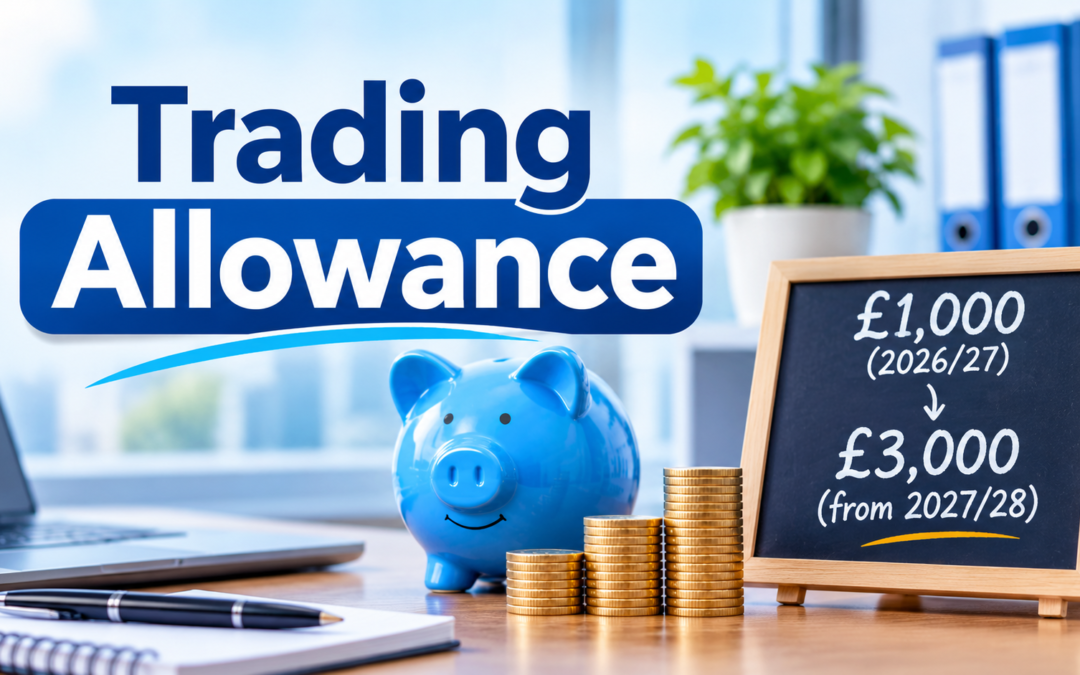
- The trading income allowance is £1,000 a year in 2026/27, and is due to rise to £3,000 from 6 April 2027.
- It is tested on gross income (what customers pay you), not profit.
- You use it instead of your actual expenses, never as well as them.
- One allowance covers all your trading and miscellaneous income combined.
- Income from your employer, a partnership or a company you control is excluded.
- Sometimes it is better not to claim it, for example in a loss-making year.
What Is the Trading Income Allowance?
The trading income allowance is a tax-free amount for small-scale income from trading, casual services and miscellaneous sources. It was introduced on 6 April 2017 to save people with tiny side incomes from keeping full accounts. GOV.UK gives examples such as babysitting, gardening, selling goods and hiring out personal equipment like power tools (tax-free allowances on property and trading income).
Three points catch people out:
- It is based on gross income. That means what customers paid, before any costs. Fees deducted by a selling platform still count as income.
- It is one allowance, not one per job. If you tutor and sell candles, both incomes share the same allowance.
- It is not the same as selling your own unwanted belongings. Clearing out your wardrobe is usually not trading at all.
Trading allowance vs property allowance
There is a separate £1,000 property allowance for income from land and property, such as renting a driveway. You can have both allowances in the same year. The property allowance cannot be used for income from letting a furnished room in your own home under the Rent a Room Scheme, which has its own higher limit (Rent a Room Scheme).
Trading Income Allowance 2026/27 vs 2027/28 (£3,000)
At the Budget on 28 October 2026, the government confirmed that the trading income allowance will rise from £1,000 to £3,000 from 6 April 2027. The Self Assessment reporting threshold for trading income rises to £3,000 at the same time, so people below it will not need to work out profits or file a return for that income (HMRC policy paper).
The change is due to be made in the Finance Bill 2026-27, so it is not law yet. HMRC estimates that up to 1.4 million people could benefit, and around 100,000 will no longer need to report their trading income at all. For 2026/27, the limit is still £1,000.
| Gross trading income | 2026/27 (£1,000) | From 2027/28 (£3,000, planned) |
|---|---|---|
| Up to £1,000 | Tax-free; usually nothing to report | Tax-free; usually nothing to report |
| £1,001 to £3,000 | Register for Self Assessment; use the allowance or expenses | Tax-free; usually nothing to report |
| Over £3,000 | Register; use the allowance or expenses | Register; deduct £3,000 or your actual expenses |
Full Relief and Partial Relief Explained
The trading income allowance works in one of two ways, depending on how much you earn. If your gross income is at or below the allowance, you get full relief: the whole amount is tax-free and, in most cases, you do not need to register or report it.
If your gross income is above the allowance, you can choose partial relief. You deduct the allowance from your income instead of deducting your real costs, and pay tax on the rest. You cannot deduct both, and the allowance can never create a loss (LITRG).
Mia earns £900 painting faces at children’s parties in 2026/27. Her gross income is under £1,000, so full relief covers it. She pays no tax on it and does not need to register for Self Assessment, as long as she has no other reason to file.
Leo earns £2,400 from online tutoring and spends £300 on books and software. With partial relief, his taxable profit is £2,400 minus £1,000, which is £1,400. Using his real costs, it would be £2,100. The allowance is better, and saves him £140 in tax at the basic rate. In 2027/28, the same income would be fully covered by the £3,000 allowance.
Trading Income Allowance vs Actual Expenses: Which Is Better?
The rule of thumb is simple: if your real business costs are less than the trading income allowance, claim the allowance; if they are more, claim your costs. The table compares both methods for different incomes. Tax is shown at the 20% basic rate and ignores other income.
| Gross income | Real costs | Allowance | Profit with allowance | Profit with costs | Better choice | Tax at 20% |
|---|---|---|---|---|---|---|
| £900 | £0 | £1,000 | £0 | £900 | Allowance | £0 |
| £2,400 | £300 | £1,000 | £1,400 | £2,100 | Allowance | £280 |
| £2,400 | £1,500 | £1,000 | £1,400 | £900 | Costs | £180 |
| £2,400 | £300 | £3,000 (2027/28) | £0 | £2,100 | Allowance | £0 |
| £4,000 | £600 | £1,000 | £3,000 | £3,400 | Allowance | £600 |
| £4,000 | £600 | £3,000 (2027/28) | £1,000 | £3,400 | Allowance | £200 |
Sana sells candles for £2,400 and spends £1,500 on wax, jars and stall fees. Her real costs are higher than the £1,000 allowance, so she claims them instead. Her taxable profit is £900, rather than £1,400 with the allowance, and her tax is £180 instead of £280. In 2027/28, the £3,000 allowance would cover her whole income.
Flat-rate simplified expenses are another way to cut paperwork. Our guide to simplified tax options compares them with the trading allowance and the cash basis.
Who Can’t Use the Trading Allowance?
The trading income allowance is aimed at genuine small side incomes, so GOV.UK excludes some income completely. You cannot use it for:
| Income from | Why it is excluded |
|---|---|
| A partnership you, or a connected person, are a partner in | Partnership profits are taxed under partnership rules |
| A company you, or a connected person, own or control | Stops profits being moved out of a company tax-free |
| Your employer, or your spouse’s or civil partner’s employer | Stops pay being disguised as side income |
For example, if you work in an office and your employer pays you separately to run its social media at weekends, that income cannot use the allowance. If you sell your own crafts to the public, it can.
A connected person usually means your spouse or civil partner, close relatives and their spouses, and business partners. If you are unsure whether a company or partnership counts as connected, check before claiming.
If you have more than one side income
You get one trading income allowance in total, however many side incomes you have. Where your combined gross income is over £1,000, you can choose which source to set the allowance against. Once you use it against a source, you cannot also claim expenses for that same source.
Priya earns £1,200 from dog walking with almost no costs, and £1,800 from selling prints, with £1,100 of printing costs. She sets the allowance against the dog walking, leaving £200 of profit, and claims her real costs against the prints, leaving £700. Her total taxable profit is £900. Using the allowance against the prints instead would leave £1,200 plus £800, which is £2,000.
You must also choose: if you claim the trading income allowance against a business, you cannot deduct any expenses or capital allowances for that same income.
Do You Need to Tell HMRC?
Whether you need to tell HMRC depends on your gross income and on whether you already file a return. In 2026/27:
- Gross trading income of £1,000 or less: you usually do not need to tell HMRC, unless one of the exclusions applies.
- Gross trading income over £1,000: register for Self Assessment by 5 October after the end of the tax year (register for Self Assessment).
- Other miscellaneous income between £1,000 and £2,500: contact HMRC, which may collect the tax another way.
- Already filing a tax return? Include the income and deduct the allowance on the return.
Selling platforms now report some sellers’ earnings to HMRC each year. Being reported does not mean you owe tax; the allowance still applies. If you are weighing up a side hustle more broadly, Eternity Accountants covers this in its guide to side hustle tax.
How to Claim the Trading Allowance on Your Tax Return
If you file a Self Assessment return, you claim the trading income allowance on the return itself. There is no separate form. How you do it depends on what kind of income it is:
- Self-employment: on the self-employment pages, enter your total turnover, then enter the allowance in the trading income allowance box instead of filling in expenses. On recent short pages (SA103S) this is box 10.1; check the box number on the current form.
- Casual or miscellaneous income: enter the income in the “any other taxable income” section of the main return (box 17 of the SA100), after deducting the allowance.
- Records: keep a note of your gross income, dates and who paid you, even if the allowance covers it all.
If you file online, HMRC’s service asks whether you want to claim the trading allowance and does the deduction for you. Our self-employed tax return guide walks through the rest of the self-employment pages.
Omar sells refurbished phones online for £4,000 and spends £600 on parts. In 2026/27, he claims the £1,000 allowance, leaving a profit of £3,000 and tax of £600 at the basic rate. If the £3,000 allowance applies in 2027/28, his profit drops to £1,000 and his tax to £200, without any change in his sales.
When Not to Claim the Trading Allowance
The trading income allowance is optional. In some situations you are better off claiming your real figures, or filing a return even though you are under the limit:
- You made a loss. The allowance cannot create a loss, so claim your real costs to get loss relief.
- Your costs are higher than the allowance. Expenses give a lower profit.
- You want to pay voluntary Class 2 National Insurance to protect your State Pension record. You need to file a return to do this (self-employed National Insurance).
- You want Tax-Free Childcare or Maternity Allowance based on your self-employment.
- You claim Universal Credit. It ignores the allowance, so you report actual income and costs anyway.
Student loan repayments, by contrast, are worked out after the allowance is deducted, so claiming it can reduce what you repay.
Mistakes to Avoid
| Mistake | What happens | What to do instead |
|---|---|---|
| Using profit instead of gross income | You may miss that you are over the limit | Test the limit on what customers paid you |
| Claiming the allowance plus expenses | Profit is understated and tax is due later | Choose one method for each source |
| Assuming £3,000 applies now | You may not register when you should | Use £1,000 for 2026/27 |
| Using it on income from your employer | The allowance is not available | Report it as normal income |
| Claiming one allowance per side job | Too much is deducted | Share one allowance across all sources |
| Not registering once over £1,000 | Late filing penalties and interest | Register by 5 October |
Trading Income Allowance: FAQs
How much is the trading income allowance in 2026/27?
It is £1,000 for the 2026/27 tax year. It covers your combined gross income from trading, casual services and miscellaneous sources.
Is the trading allowance going up to £3,000?
Yes, it is due to rise to £3,000 from 6 April 2027, along with the reporting threshold. The change will be made in the Finance Bill 2026-27 and is not law yet.
Is the trading allowance based on income or profit?
It is based on gross income, meaning what you received before any costs. Platform fees deducted from your payments still count as income.
Can I claim the trading allowance and expenses together?
No. For the same income, you either deduct the allowance or your actual expenses. Choose whichever gives the lower taxable profit.
Do I need to tell HMRC if I earn under £1,000?
Usually not, if your gross trading income is £1,000 or less and none of the exclusions apply. You may still want to file to claim a loss or pay voluntary Class 2.
Can I use the trading allowance and the property allowance together?
Yes. They are separate £1,000 allowances, so you can use one against trading income and one against property income in the same year.
Can I use the trading allowance if I am a partner in a partnership?
No. Income from a partnership you, or a connected person, are a partner in cannot use the trading allowance.
Does the trading allowance affect Universal Credit?
Universal Credit uses its own rules and ignores the allowance. You report your actual self-employed income and expenses to the DWP.
Final Verdict: Make the Trading Income Allowance Work for You
The trading income allowance is one of the simplest reliefs HMRC offers. For 2026/27, the first £1,000 of side income is tax-free, and above that you deduct whichever is bigger: the allowance or your real costs. From April 2027, the limit is due to rise to £3,000. Check your gross income each year, keep your receipts and register on time.
- Add up your gross side income for the tax year, from every source.
- Compare the trading allowance with your real costs using the table above.
- If you are over £1,000, register for Self Assessment by 5 October.