

Accountant for Late Tax Return: How to Fix a Missed Deadline and Limit the Damage
Missing the Self Assessment deadline isn’t the end of the world, but it does start a clock you can’t stop by ignoring it. HMRC’s penalty system is automatic and doesn’t pause while you decide what to do next — every week you wait can add to the bill. Bringing in an accountant at this point isn’t about admitting defeat; it’s usually the fastest way to stop the penalties climbing and get your affairs back on track.
This guide sets out exactly what happens when a return is filed late, how the penalty ladder actually works, what a “reasonable excuse” needs to look like, and what an accountant can genuinely do for you once the deadline has already passed. It’s written from the perspective of someone who deals with these calls regularly — the panic, the paperwork, and the practical next steps.
Quick Answer
If you’ve missed the Self Assessment deadline, an accountant for a late tax return can prepare and submit your return quickly, work out exactly what penalties and interest apply, check whether a reasonable excuse claim is worth making, and handle communication with HMRC on your behalf. Acting fast matters because HMRC’s penalties escalate on a fixed timetable — starting at £100 the day after the deadline and rising sharply the longer a return stays outstanding.
Key Takeaways
- A late Self Assessment return triggers an automatic £100 penalty the moment the deadline passes — even if you owe no tax at all.
- After 3 months, daily penalties of £10 kick in, capped at £900.
- At 6 and 12 months, further penalties apply — the greater of £300 or 5% of the tax due, each time.
- Late filing penalties and late payment penalties are separate — you can be hit with both at once.
- Interest accrues daily on unpaid tax from the day after the payment deadline.
- HMRC will sometimes accept a “reasonable excuse” and cancel a penalty, but the bar for what qualifies is genuinely strict.
Table of Contents
- What Counts as a “Late” Tax Return?
- The Late Filing Penalty Ladder Explained
- Late Filing vs Late Payment Penalties
- How Much Could a Late Return Actually Cost You?
- What Counts as a Reasonable Excuse?
- How to Appeal a Penalty (Form SA370)
- What an Accountant Can Actually Do at This Stage
- Late Tax Return Help for London Taxpayers
- Common Mistakes People Make
- Accountant Insights: What We See in Practice
- Should You Hire an Accountant Right Now? (Decision Framework)
- DIY vs Penalty Specialist vs Accountant (Comparison)
- Checklists
- FAQs
- Sources
- Final Thoughts
What Counts as a “Late” Tax Return?
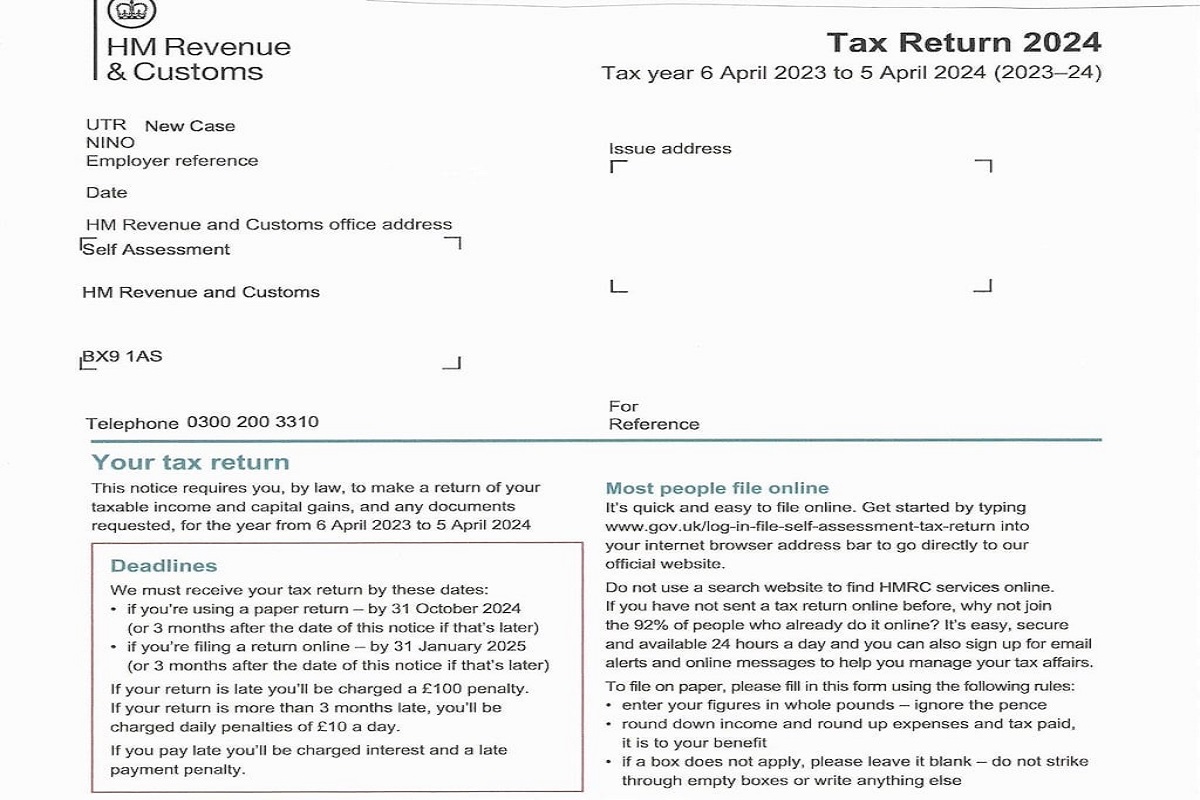
Your Self Assessment return is late the moment it’s filed after the relevant deadline — 31 October for a paper return, or 31 January for one filed online, both covering the tax year that ended the previous 5 April. There’s no grace period built in. File at one minute past midnight on 1 February and, as far as HMRC’s system is concerned, you’re already late.
This applies whether you’re a sole trader, landlord, company director, or anyone else required to file a return — and it applies even if you don’t actually owe any tax. The £100 penalty is tied to the act of filing late, not to the size of your tax bill.
The Late Filing Penalty Ladder Explained
HMRC’s penalties for a late Self Assessment return escalate in stages, and each stage is triggered automatically once the relevant time has passed:
- Day 1 late: A fixed £100 penalty applies immediately, regardless of what you owe.
- 3 months late: Daily penalties of £10 start accruing, running for up to 90 days — a maximum additional £900.
- 6 months late: A further penalty applies — whichever is greater, £300 or 5% of the tax due.
- 12 months late: Another penalty on the same basis — £300 or 5% of the tax due, whichever is higher. In cases where HMRC decides the failure was deliberate and the information was concealed, this can rise dramatically, in the most serious cases up to 100% of the tax owed.
Add these together and even a return with no tax owed can accumulate significant penalties over a year of continued delay — the fixed charges alone can reach well over £1,000 before any late payment penalties or interest are factored in.
Late Filing vs Late Payment Penalties
It’s easy to assume filing and paying are the same problem, but HMRC treats them as two separate failures, each with its own penalty structure.
Late filing penalties punish the return itself being late — the £100/£10-a-day/£300-or-5% ladder above applies regardless of whether tax is owed.
Late payment penalties apply on top, calculated as a percentage of the tax that’s still outstanding — typically a charge once payment is around 30 days overdue, with further charges at the 6 and 12-month marks if the balance is still unpaid. Interest is charged separately again, accruing daily on the outstanding tax from the day after the payment deadline until it’s cleared in full.
In practice, this means someone who both files and pays late can be facing three overlapping cost streams at once: filing penalties, payment penalties, and interest — which is exactly why the total bill can escalate faster than people expect.
How Much Could a Late Return Actually Cost You?
Illustrative Example: Someone owing £5,000 in tax who files and pays six months late could be looking at the £100 fixed penalty, up to £900 in daily filing penalties, a further £300 (or 5% of £5,000, whichever is higher) for the 6-month filing mark, plus separate late payment penalties calculated on the £5,000 owed, and daily interest running the entire time. Depending on exactly how the delay plays out, the combined penalties alone can comfortably exceed £1,500 — before the original tax bill is even accounted for.
Illustrative Example: Someone who owes no tax at all but simply forgets to file isn’t off the hook either — the £100 fixed penalty and the daily £10 charges after 3 months apply regardless, meaning a return with a genuine £0 tax liability can still generate penalties running into several hundred pounds through inaction alone.
What Counts as a Reasonable Excuse?
HMRC can cancel a late filing penalty if you have what it calls a “reasonable excuse” — but the threshold is genuinely high, and vague explanations rarely succeed. Circumstances that have been accepted in the past tend to involve something outside your control that struck close to the deadline, such as:
- A serious or life-threatening illness, or the death of a close relative shortly before the deadline.
- An unexpected hospital stay that prevented you from filing.
- A failure in HMRC’s own online services during the period you tried to file.
- A fire, flood, or theft that destroyed the records you needed.
- Postal delays that were genuinely outside your control, for a paper return.
What generally doesn’t count: being too busy, relying on someone else and not following up, finding the online system confusing, or simply forgetting. HMRC expects you to have put reasonable effort into filing on time and to act promptly once the issue causing the delay has passed — waiting months to submit after the excuse has resolved usually weakens the case considerably.
How to Appeal a Penalty (Form SA370)
If a penalty has already landed and you believe it’s unfair, appeals are made using form SA370, generally within 30 days of the penalty notice. The appeal needs to set out clearly what happened, why it stopped you filing or paying on time, and — critically — the return itself usually needs to be filed before or alongside the appeal, since HMRC won’t consider cancelling a penalty for a return that’s still outstanding.
Appeals succeed far more often when they’re backed by evidence — a hospital letter, a death certificate, documentation of a system outage — rather than a general explanation. This is one of the areas where an accountant’s experience with how HMRC actually assesses these cases can make a meaningful difference to the outcome.
What an Accountant Can Actually Do at This Stage
Once a deadline has already passed, an accountant’s role shifts from routine compliance to damage control. In practice, this usually covers:
- Getting the return filed as fast as possible — every extra day adds to the daily penalty count once you’re past the 3-month mark, so speed genuinely saves money.
- Calculating the real penalty and interest position — working out exactly what’s accrued so far and what’s still to come, rather than guessing.
- Assessing whether a reasonable excuse claim is realistic — an honest read on whether it’s worth pursuing, rather than a false promise of automatic cancellation.
- Preparing and submitting the SA370 appeal with the right supporting evidence attached, if there’s a genuine case.
- Negotiating a Time to Pay arrangement with HMRC if the tax owed can’t be settled in one go, which can also reduce further late payment penalties.
- Reviewing multiple outstanding years at once if more than one return has been missed, so everything is brought up to date together rather than piecemeal.
The value isn’t just in the paperwork — it’s in knowing which penalties are genuinely fixed, which have room for negotiation, and which mistakes (like filing without first checking for missed reliefs) tend to cost people more in the long run.
Late Tax Return Help for London Taxpayers
Late filing is common everywhere in the UK, but London’s mix of contractors, freelancers, and side-income earners tends to produce a particular pattern: people who only became liable for Self Assessment recently — through a new consultancy arrangement, a property let out for the first time, or income crossing the £100,000 or £50,000 thresholds — and simply didn’t realise a return was due until the penalty notice arrived.
The volume and pace of freelance and contract work across London also means many people are juggling several income streams at once, which makes it easier for a filing deadline to slip through the gaps, particularly for anyone new to the system.
If you’re based in London and have missed a deadline, a local accountant who regularly handles late and first-time Self Assessment cases can usually get a return filed within days rather than weeks, and can advise quickly on whether your circumstances support a reasonable excuse claim before the 30-day appeal window closes.
Common Mistakes People Make
1. Waiting until the return is “perfect” before filing
Why it happens: People delay filing because they’re missing one figure or want everything exact first.
Consequence: Daily penalties accrue in the meantime — a rough return filed on time and corrected later is almost always cheaper than a perfect one filed late.
How to avoid it: File with your best available figures and amend afterwards if needed; HMRC allows corrections after submission.
2. Assuming no tax owed means no penalty
Why it happens: It seems logical that penalties should relate to tax owed.
Consequence: The £100 fixed penalty and daily charges apply regardless of your tax bill, catching people who file late but owe nothing off guard.
How to avoid it: Treat the filing deadline as separate from the payment deadline — both carry their own penalties.
3. Ignoring penalty notices and hoping they’ll go away
Why it happens: Opening a penalty letter feels stressful, so some people put it aside.
Consequence: The 30-day appeal window for SA370 can pass, and daily/tax-geared penalties keep accumulating in the background.
How to avoid it: Deal with the notice immediately — even just filing the outstanding return stops the daily penalty clock.
4. Submitting a reasonable excuse claim with no evidence
Why it happens: People assume a written explanation alone will be enough.
Consequence: Weak or unsupported claims are routinely rejected, wasting the appeal opportunity.
How to avoid it: Gather supporting documents — medical letters, HMRC system status records, correspondence — before submitting the appeal.
5. Not addressing multiple missed years together
Why it happens: One overdue return often gets tackled while older, also-overdue years are left untouched.
Consequence: Penalties keep compounding across every outstanding year separately, and HMRC may escalate enforcement action.
How to avoid it: Bring all outstanding years up to date in one exercise, ideally with professional help to sequence it correctly.
Accountant Insights: What We See in Practice
- Speed matters more than most people assume — filing even a day earlier inside the 3-month daily-penalty window can make a measurable difference to the final bill.
- People frequently underestimate how “no tax owed” cases still rack up penalties, particularly those who file late because they mistakenly believed no return was required.
- Reasonable excuse claims succeed far more often when the return is filed first — HMRC is generally far less receptive to an appeal sitting alongside an outstanding return.
- Time to Pay arrangements are underused — agreeing a payment plan before penalties escalate can prevent further late payment charges from stacking up.
- First-time Self Assessment filers are disproportionately represented among late filers, often because they didn’t realise new income (rental, side consultancy, crossing the £100,000 threshold) triggered a filing obligation in the first place.
Should You Hire an Accountant Right Now?
A quick way to decide:
Step 1: Check how overdue you already are.
Within the first few weeks, filing yourself on GOV.UK is often manageable. Past the 3-month daily-penalty mark, professional help usually pays for itself in penalties avoided.
Step 2: Consider whether more than one year is involved.
Multiple outstanding returns are far easier to untangle with someone experienced in sequencing HMRC submissions correctly.
Step 3: Assess whether you have a genuine reasonable excuse.
If your circumstances might qualify, an accountant can judge realistically whether an appeal is worth pursuing and help build the evidence.
Step 4: Think about the tax bill itself, not just the penalty.
If a significant amount is owed, professional advice on a Time to Pay arrangement can limit ongoing late payment penalties and interest.
DIY vs Penalty Specialist vs Accountant
| Option | Advantages | Disadvantages | Best For |
|---|---|---|---|
| File it yourself via GOV.UK | Free, quick for a single simple return | Easy to miss reliefs; no help with penalty appeals or Time to Pay | A recently missed deadline with straightforward income |
| Penalty appeal specialist | Focused purely on fighting the fine | May not handle the underlying return or tax planning | Cases centred on disputing one specific penalty |
| Qualified accountant | Files the return, calculates the full penalty position, handles appeals and Time to Pay together | Costs a fee | Multiple overdue years, complex income, or a real reasonable-excuse case |
Checklists
Checklist 1: Before You File a Late Return
- ✓ Confirm exactly which tax year(s) are outstanding
- ✓ Gather income records, expenses, and any P60s/P45s
- ✓ Check your Personal Tax Account for existing penalty notices
- ✓ Note the date the original deadline passed, to calculate accrued penalties
- ✓ Decide whether you may have a genuine reasonable excuse
Checklist 2: If You’ve Received a Penalty Notice
- ✓ File the outstanding return immediately, even before appealing
- ✓ Note the 30-day window for an SA370 appeal
- ✓ Gather supporting evidence for any reasonable excuse claim
- ✓ Ask about a Time to Pay arrangement if the tax bill can’t be settled at once
- ✓ Check for any other outstanding years while you’re dealing with HMRC
FAQs
What happens if I file my tax return late?
You’ll receive an automatic £100 penalty as soon as the deadline passes, followed by daily £10 charges after 3 months, and further penalties at 6 and 12 months — all separate from any late payment charges on tax owed.
Do I still get a penalty if I don’t owe any tax?
Yes. The filing penalty is tied to the return being late, not to your tax bill — even a £0 liability return can generate penalties if it’s filed after the deadline.
Can an accountant get my HMRC penalty cancelled?
An accountant can assess whether you have a genuine reasonable excuse and prepare a well-evidenced SA370 appeal, but cancellation depends on HMRC accepting the excuse — it isn’t guaranteed.
How quickly can an accountant file a late tax return?
Straightforward cases can often be filed within a few days once the necessary records are provided, which is important given that penalties increase the longer a return stays outstanding.
What counts as a reasonable excuse for HMRC?
Serious illness, bereavement, an HMRC system failure, or a fire, flood or theft affecting your records are commonly accepted. General busyness or forgetting is not.
What is form SA370 used for?
It’s the form used to appeal a Self Assessment late filing or late payment penalty, generally submitted within 30 days of the penalty notice.
Can I be fined for filing late even by one day?
Yes. The £100 fixed penalty applies from the day after the deadline, regardless of how short the delay is.
What if I have several years of tax returns outstanding?
Each year is treated separately for penalty purposes, so multiple outstanding returns should be brought up to date together, ideally with professional guidance to manage the process efficiently.
Will HMRC take further action if I keep missing deadlines?
Persistent late filing can lead to escalated penalties and closer scrutiny of your tax affairs, so addressing the pattern early is worthwhile.
Is it cheaper to file late myself or pay an accountant?
For a single, simple, recently missed deadline, filing yourself is usually cheapest. For multiple years, complex income, or a genuine appeal case, an accountant’s fee is often outweighed by the penalties and interest avoided.
Sources
- HMRC / GOV.UK — Self Assessment tax return penalties
- GOV.UK — Self Assessment: appeal against penalties (SA370)
- Low Incomes Tax Reform Group (LITRG) — Tax penalties and interest
- HMRC — Interest rates for late and early payments
Penalty rates, thresholds and the Making Tax Digital penalty-points system are subject to periodic change by HMRC — figures should be checked against current GOV.UK guidance before publication.
Final Thoughts
A missed Self Assessment deadline is stressful, but it’s rarely as unmanageable as it first feels — what matters most is acting quickly, because HMRC’s penalty ladder rewards speed and punishes delay in equal measure. Filing the outstanding return, understanding exactly what’s accrued, and knowing whether a reasonable excuse genuinely applies are the three things that make the biggest difference to the final cost.
If you’ve missed a deadline — whether by a few days or several months — speaking with a qualified accountant can help you file quickly, understand your penalty position clearly, and put together a realistic plan for getting back on track with HMRC.
Written by:
Shamayun Chowdhury
Senior Accountant, Major Accountancy
Lecturer in Accounting, Nottingham Trent University
CIMA Qualified, 15+ Years Experience
Last Reviewed: August 2026