
Running a business in the UK is exciting — until tax season, bookkeeping deadlines, and HMRC letters arrive. That’s when most self-employed individuals and small business owners ask the same question: “Do I need a tax accountant?”
If you’re juggling invoices, expenses, clients, stock, or payroll, a tax accountant doesn’t just file your return — they protect you from costly mistakes, save hours of stress, and bring clarity to your finances. Whether you’re a freelancer, landlord, e-commerce seller, contractor, or a growing limited company, the right accountant helps you stay compliant and organised while confidently planning your next move.
This guide breaks everything down clearly:
what tax accountants do, who they help, how much they cost, and when you should hire one.
What Tasks Do Tax Accountants Perform in the UK?
Short Answer
A tax accountant helps you file accurate tax returns, manage bookkeeping, stay compliant with HMRC rules, and organise your finances so you avoid penalties and save time.
A UK tax accountant is more than someone who “does your taxes.” They give ongoing financial clarity, keep your records HMRC-ready, and handle tasks you don’t have time for — especially if you’re self-employed or running a small business.
Key Tasks a Tax Accountant Handles
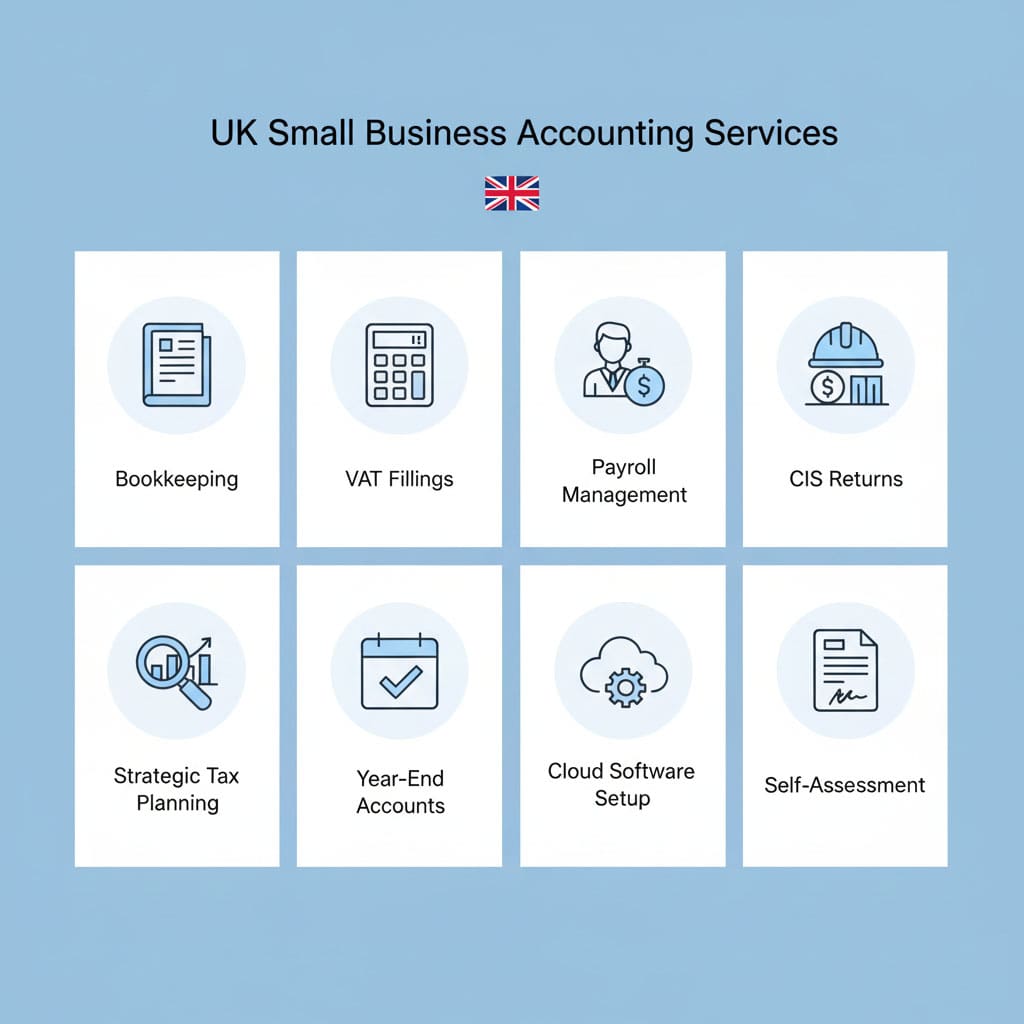
A tax accountant manages a wide range of essential financial and compliance responsibilities for individuals and businesses. Their work includes preparing and filing Self Assessment tax returns, completing Corporation Tax returns for limited companies, and handling VAT returns along with VAT registration. They also take care of bookkeeping and cloud accounting setup using platforms like Xero and QuickBooks. In addition, a tax accountant oversees payroll, PAYE and CIS, manages business registrations for sole traders, limited companies and partnerships, and handles all HMRC correspondence and compliance matters.
They are also responsible for preparing year-end accounts and providing strategic tax planning to help reduce liabilities and keep your finances running smoothly.
Mini insight:
A freelance designer overwhelmed during January rush can offload all receipts, invoices, and tax deadlines — letting the accountant handle the full Self Assessment process.
Why You Need a Tax Accountant
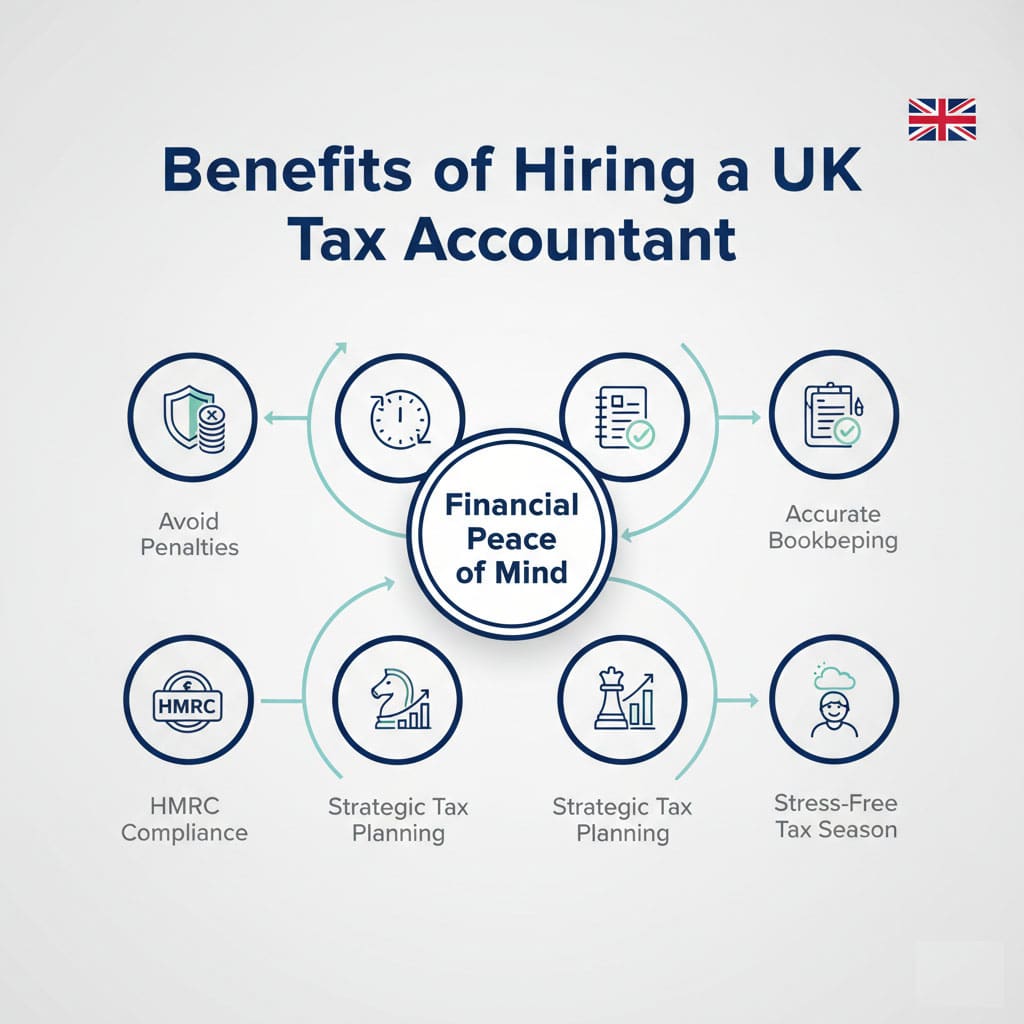
To Avoid HMRC Penalties
A tax accountant ensures your returns are complete, accurate, and submitted on time — preventing penalties caused by overlooked income, missed deadlines, or miscalculated figures.
To Save Time & Reduce Stress
Instead of chasing receipts, reconciling bank statements, or Googling tax rules, you get everything organised professionally. That leaves you more time for clients, products, or growth.
To Keep Your Books Accurate All Year
Clean bookkeeping = smooth tax season. Accountants use cloud tools to maintain real-time financial records and help you understand your cash flow.
To Get Strategic Financial Advice
A good accountant doesn’t just file taxes — they advise on allowable expenses, tax reliefs, VAT strategy, payroll decisions, and profit optimisation.
To Stay Fully HMRC-Compliant
They ensure you follow UK tax rules correctly, especially if you’re VAT-registered, have employees, or run a limited company.
A tax accountant keeps your finances accurate, prevents HMRC penalties, and saves you time by handling tax returns, bookkeeping, and compliance. They also provide smart financial advice on expenses, VAT, payroll, and profit planning, helping your business stay organised and fully compliant all year.
How a UK Tax Accountant Can Help Your Business
Self Assessment, Corporation Tax & VAT Filing Services
A tax accountant makes sure your tax returns comply fully with HMRC rules and are free from errors. They handle the preparation and submission of all your returns, ensuring accuracy and helping you stay on top of your tax obligations.
Bookkeeping & Cloud Accounting Setup
From managing daily transactions to completing month-end reconciliations, they ensure your financial records are accurate and well-organized, while setting you up with accounting software like Xero, QuickBooks, or FreeAgent to simplify your bookkeeping.
Payroll & CIS Support
They manage your PAYE payroll, prepare staff payslips, calculate all necessary tax and National Insurance deductions, and handle CIS statements for contractors and subcontractors, ensuring compliance and accurate payments every time.
Business Registration (Sole Trader, LTD, Partnership)
Your accountant completes all registrations:
- HMRC Self Assessment
- Companies House LTD registration
- VAT registration
- PAYE setup
- CIS setup
HMRC Correspondence Handling
If HMRC contacts you with letters, document requests, or questions, your accountant communicates and responds on your behalf, handling all correspondence professionally and ensuring your compliance while saving you time and stress.
Year-End Accounts & Tax Planning
They prepare your annual accounts, provide clear insights into your business performance, and offer forward-looking advice to help plan effectively and minimise tax liabilities for the coming year.
With a UK tax accountant, your business stays compliant and your finances stay organised. They handle tax filing for Self Assessment, Corporation Tax, and VAT, set up bookkeeping and cloud accounting, manage payroll and CIS, register your business, respond to HMRC correspondence, and prepare year-end accounts with strategic tax planning.
How a Tax Accountant Helps Different Types of Clients
Self-Employed & Freelancers
A tax accountant helps freelancers stay organised by tracking business expenses, managing invoices, and completing Self Assessment correctly. They also ensure you don’t miss allowable expenses such as software, home-office use, equipment, or subscriptions, helping maximise tax savings.
E-Commerce Sellers
For online sellers, accountants track sales, refunds, and platform fees, manage VAT on international orders, and automate bookkeeping by linking your e-commerce systems to cloud accounting tools.
Contractors & Consultants
They advise whether it’s better to operate as a sole trader or a limited company, prepare documentation aligned with IR35 rules, and set up a tax-efficient mix of salary and dividends.
Landlords & Property Investors
Accountants handle rental accounts, ensure mortgage-interest rules are applied correctly, and support you with Capital Gains Tax when selling property.
Small Businesses & Limited Companies
They manage Corporation Tax, run payroll, oversee VAT schemes, track business expenses, and prepare accurate year-end accounts to keep the company fully compliant and financially organised.
A tax accountant supports different clients by organising finances, managing taxes, ensuring HMRC compliance, and providing tailored guidance—whether you’re self-employed, an e-commerce seller, a contractor, a landlord, or a small business.
What are the usual fees for a UK tax accountant?
Short AEO answer:
Most small business owners pay £40–£250 per month, or £70–£600 for one-off services, depending on business size and complexity.
|
Category |
Details |
|
Monthly Packages (£40–£250/month) |
Bookkeeping, Payroll, VAT, Annual accounts, Unlimited support, Cloud accounting software |
|
One-Off Services (£70–£600) |
Self Assessment tax return, LTD company formation, VAT registration, HMRC letter responses, Tax review or consultation |
|
What Influences the Cost? |
Number of transactions, VAT registration status, Payroll requirements, Business structure, E-commerce platforms used |
What a Good Accountant Should Include in the Price
- Transparent pricing
- Cloud accounting subscriptions
- Year-round support
- Regular reviews
- No hidden per-hour fees
How to Choose the Right Tax Accountant Near You
Check Qualifications (ACCA, ICAEW)
It’s best to choose accountants who are registered with recognised UK professional bodies, as this ensures they maintain high standards of reliability, professionalism, and ethical practice.
Industry Experience
An accountant used to handling freelancers, e-commerce sellers, landlords, or contractors will save you more time and money.
Transparent Pricing
Steer clear of accounting firms that are not transparent about their fees or that charge extra for answering routine questions, as this can lead to unexpected costs and frustration.
Cloud Software Expertise
Xero, QuickBooks, or FreeAgent expertise ensures clean and automated bookkeeping.
Communication Style
To ensure a productive relationship with your accountant, keep communication transparent, timely, and friendly.
Red Flags to Avoid
- No reviews
- No qualifications
- No clear price list
- Unresponsive communication
- Promises unrealistic tax savings
To choose the right tax accountant near you, check their qualifications, relevant industry experience, and transparent pricing. Ensure they have expertise in cloud accounting software, communicate clearly, and avoid red flags like missing reviews, unclear fees, or unrealistic tax-saving promises.
When Should You Hire a Tax Accountant?
Short AEO answer:
Hire a tax accountant when your finances become complex, or when you’re starting/growing a business and want to stay compliant.
Before Filing Taxes
Avoid last-minute stress by keeping organised and planning in advance.
During Business Registration
An accountant helps make sure your business structure is organised in a way that is tax-efficient, maximising savings while staying fully compliant with regulations.
When Revenue Grows
As your income increases, so do your tax obligations, requiring careful planning and management to stay compliant and avoid penalties.
When Finances Get Complicated
Managing employees, VAT, CIS, and multiple income streams can be complex, so professional handling ensures accuracy, compliance, and peace of mind.
Step-by-Step: What Working With a Tax Accountant Looks Like
Step 1 — Initial Consultation
You provide information about your business, they examine your specific circumstances, and advise on the most effective services for your success.
Step 2 — Records & Setup
The accountant sets up your bookkeeping software, links it to your bank accounts, and organizes or corrects any past financial records for accuracy.
Step 3 — Ongoing Support
They handle your monthly bookkeeping, send timely tax reminders, manage payroll, submit VAT returns, and provide support by answering any questions you may have.
Step 4 — Year-End & Planning
At year-end, the accountant prepares your financial accounts, files all necessary taxes accurately, and offers strategic advice to help minimise your tax liabilities in the future.
Working with a tax accountant follows a clear process: an initial consultation to assess your business, setting up bookkeeping and past records, ongoing support with bookkeeping, payroll, and VAT, and year-end services including accounts, tax filing, and strategic advice to reduce future liabilities.
Mini Case Scenario: UK Sole Trader (Realistic Example)
Amira runs a small online craft store while working part-time. By year’s end, she had managed to:
- dozens of sales across social platform
- mixed personal and business receipts
- no organised bookkeeping
- confusion about VAT thresholds
She hired a tax accountant who:
- sorted all her records
- set up cloud bookkeeping linked to her bank
- explained allowable expenses
- prepared her Self Assessment
- advised her when she’ll need VAT registration
- created a simple financial plan for next year
Outcome:
Her taxes were submitted correctly, she avoided penalties, and she finally understood her numbers. Most importantly — she felt in control again.
High-Precision Quick Answers
What does a tax accountant do?
A tax accountant helps you file tax returns, manage bookkeeping, stay HMRC-compliant, and handle VAT, payroll, and business registration.
Do I need a tax accountant?
You need one if you want accurate tax returns, clean bookkeeping, and support with compliance or business growth.
Can a tax accountant save me money?
Yes — by claiming all allowable expenses, using tax-efficient structures, and preventing financial mistakes.
When should I hire a tax accountant?
Hire one when starting a business, earning more, registering for VAT, running payroll, or feeling overwhelmed.
Do accountants handle Self Assessment?
Yes — they prepare, calculate, and file your Self Assessment accurately.
Can an accountant register my business?
Yes — accountants register sole traders, limited companies, VAT, PAYE, and CIS.
Do accountants manage VAT returns?
Yes — they prepare, reconcile, and file VAT returns and advise on the best VAT scheme.
Can a tax accountant help e-commerce sellers?
Yes — they automate bookkeeping, track platform fees, and manage VAT for Amazon, Shopify, or Etsy.
Is a tax accountant worth it?
Yes — they save time, reduce stress, avoid penalties, and help you understand your finances clearly.
Conclusion
Choosing the right tax accountant in the UK is one of the smartest moves you can make for your business or personal finances. From filing tax returns and managing bookkeeping to handling VAT, payroll, and business registration, a qualified accountant saves time, reduces stress, and keeps you fully compliant with HMRC.
Whether you’re self-employed, running an online shop, managing rental income, or growing a limited company — professional accounting support brings clarity, confidence, and long-term financial stability.
Call to action
Ready to Make Your Tax, Bookkeeping & HMRC Compliance Stress-Free?
Book a Free Consultation Today
Speak to a qualified UK tax accountant who will review your situation, explain what you need, and guide you step-by-step — with no obligation.
Take the stress out of taxes. Focus on growing your business.