

The accountant is your financial partner, helping you manage money, taxes, and compliance with ease. No matter if you’re managing money as an individual, freelancer, or small business owner in the UK, an accountant keeps your finances organised, precise, and compliant.
Accountants do more than just crunch numbers—they provide expert advice on tax planning, cash flow management, and strategic decisions that can save you money and time. Modern accountant UK also use cloud software to provide real-time insights and offer business strategy advice beyond compliance.
This guide will explain what accountants do, the different types you can hire, how to find the right one & financial advice, expected fees, and the key benefits of professional accounting support. In the end, you’ll understand how an accountant can take the stress out of finances and help you earn more.
What Can an Accountant Help You With in the UK?
An accountant helps individuals and businesses manage finances, stay compliant with UK laws, and make informed financial decisions. Their work goes far beyond basic bookkeeping.
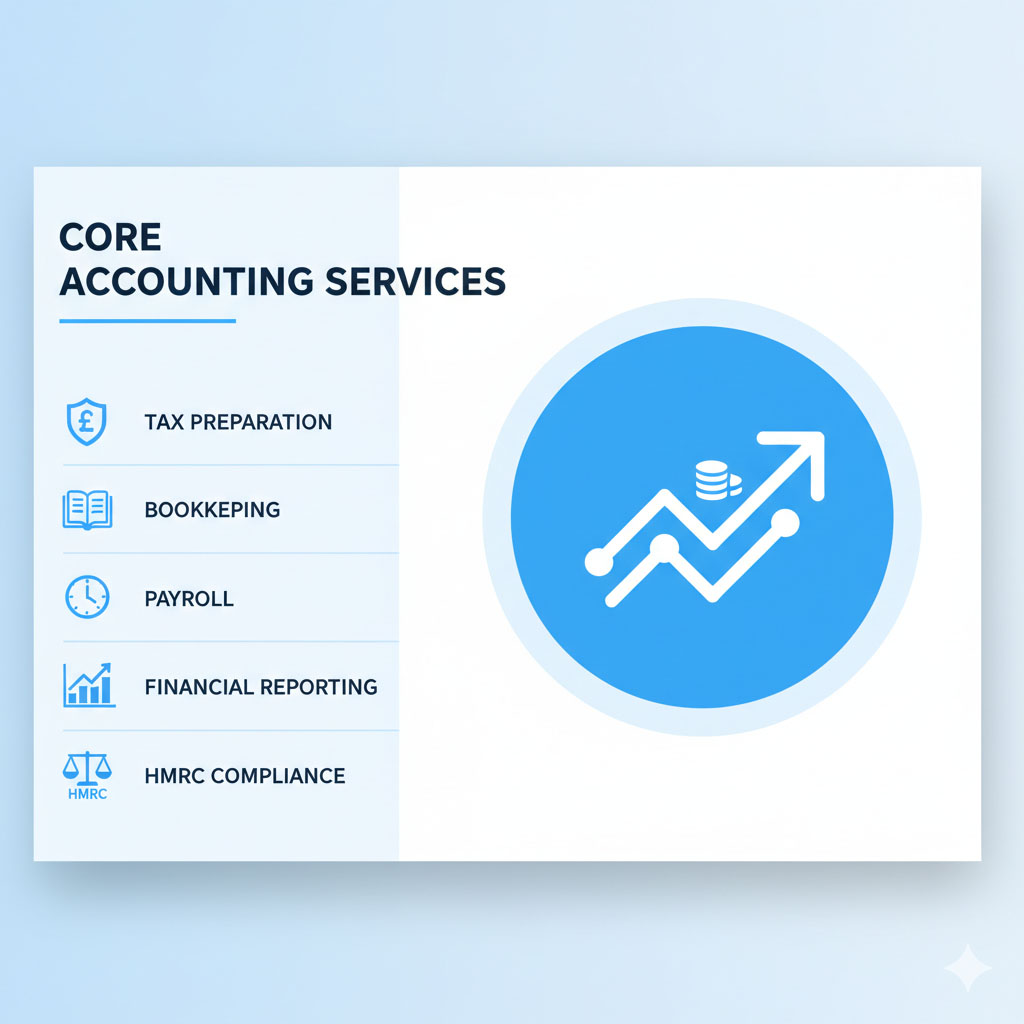
Services Accountants Offer
Tax Preparation: Handling income tax, corporation tax, and VAT submissions.
Bookkeeping: Recording daily financial transactions accurately.
Payroll Management: Making sure employees are paid accurately and all pension obligations are taken care of.
Financial Reporting: Preparing key financial documents such as balance sheets, profit-and-loss statements, and cash flow summaries.
Financial Strategy and Guidance
Accountants can provide advice on budgeting, investment decisions, and business growth strategies. They help you plan for the future while optimising current finances.
Compliance with HMRC and Companies House
Accountants in the UK keep your documents fully compliant with HMRC and Companies House, reducing the likelihood of regulatory issues.
Example: A small UK business using an accountant avoided a £3,000 penalty by filing VAT correctly and on time.
Types of Accountants You Can Hire
- Chartered Accountant (CA): Expert in audits, tax planning, and corporate finance.
- Certified Public Accountant (CPA): Handles cross-border and international taxation.
- Management Accountant: Focuses on budgeting, internal processes, and strategic planning.
- Tax Accountant: Specialises in tax returns, VAT, and HMRC compliance.
- Bookkeeper vs Accountant: Bookkeepers record transactions; accountants analyse finances and provide advice.
Example: A freelancer might hire a tax accountant to maximise deductions, while an SME could use a CA for overall financial strategy.
Industry-Specific Accounting in the UK
Different businesses have unique accounting needs. Specialist accountants ensure accurate tax, compliance, and financial management.
- SMEs: Bookkeeping, payroll, VAT, cash flow, management accounts, year-end accounts. Tip: Look for monthly reports, not just year-end in SME accounting.
- E-commerce: Multi-channel sales, platform fees, inventory, VAT on digital/cross-border sales. Tip: Use an e-commerce accountant UK familiar with Shopify, Amazon, PayPal, and multi-currency sales.
- Hospitality: Payroll, VAT on food & drink, POS integration, cash-flow tracking, stock & supplier costs. Tip: Ensure EPOS integration with cloud accounting.
- Construction & Trades: CIS submissions, stage payments, VAT reverse charge, project costs. Tip: Choose a CIS-experienced construction accountant UK.
- Startups: Business setup, financial projections, funding advice, payroll, scalable systems. Tip: Work with accountants who understand growth, KPIs, and investment readiness.
Industry-specific accounting improves cash flow, tax accuracy, and operational efficiency.
Accountant Qualifications & A Day in the Life
UK Accounting Qualifications Explained
- Association of Chartered Certified Accountants (ACCA): An international qualification that develops expertise in accounting, tax, audit, and financial advisory, valued across global markets.
- ICAEW (Institute of Chartered Accountants in England & Wales): Prestigious UK qualification for financial reporting, audit, corporate finance, and strategic advice. High ethical standards.
- CIMA (Chartered Institute of Management Accountants): Focus on management accounting, budgeting, forecasting, and business strategy—ideal for growing businesses.
Why It Matters: Qualified accountants are regulated, insured, and up to date with UK tax law, reducing your risk. Unqualified accountants are not.
A qualified accountant brings professional training, ethical standards, and regulated expertise that protect your business from errors, penalties, and bad advice.
The Daily Workflow of Today’s UK Accountant
- Morning: Check cloud accounting dashboards, review alerts, respond to client queries.
- Late Morning: Reconcile transactions, categorise expenses, prepare VAT under MTD.
- Afternoon: Meet clients, advise on budgets, tax planning, loans, and growth strategies.
- Late Afternoon: Create management accounts, update forecasts, integrate apps, prepare year-end accounts.
- Evening: Follow up with clients, learn updates on tax law, improve workflows.
ACCA, ICAEW, or CIMA qualifications ensure professionalism, compliance, and up-to-date UK tax knowledge.
The Value of Having a Professional Accountant on Your Side
Tax Savings & Compliance
They know HMRC rules, expenses, and reliefs — helping you avoid penalties and prevent overpaying tax.
Error Prevention
Professionals ensure your VAT returns, payroll calculations, and corporation tax reports are accurate, protecting you from potential fines.
Strategic Advice
They provide budgeting, cash-flow, and growth guidance that helps SMEs make smarter decisions.
Example: One UK small business saved over £5,000 by hiring a chartered accountant who identified missed expenses and planned VAT effectively.
Survey-Backed Guidance: What UK Businesses Want From an Accountant
- Clear Communication
72% of SMEs say they prefer an accountant who explains finances in simple, jargon-free language.
- Proactive Advice
More than 60% report that they switched accountants because their previous adviser only reacted at year-end instead of offering forward-looking guidance.
- Technology Adoption
Businesses using cloud accounting (Xero/QuickBooks) are 30–40% more likely to feel “fully in control” of their cash flow.
- Transparent Pricing
58% cite hidden fees as the #1 frustration when hiring an accountant.
- Industry Knowledge
78% say industry-specific accountants help them avoid mistakes and reduce tax more effectively.
Pre-Hiring Checklist: What to Ask an Accountant
Qualification & Compliance Checklist Questions
| Question | Why It Matters |
| Are you ACCA/ICAEW qualified? | Confirms your accountant adheres to UK professional and ethical guidelines. |
| Do you have professional indemnity insurance? | Protects you if mistakes occur. |
| Are you registered as an HMRC agent? | Allows them to speak to HMRC on your behalf. |
Services & Support Questions
| Question | Why It Matters |
| What services are included in your monthly fee? | Avoids unexpected costs later. |
| Do you provide tax planning or only compliance? | Determines how proactive they are. |
| How often will we communicate? | Ensures you’ll get support when needed. |
| Do you offer cash-flow forecasting or growth advice? | Indicates whether they can help you scale. |
Technology Questions
| Question | Why It Matters |
| Do you work with Xero, QuickBooks, FreeAgent? | Cloud-enabled accountants help you work faster and more accurately. |
| Will you help me transition from spreadsheets to cloud software? | Ensures smooth onboarding and MTD compliance. |
| Do you offer real-time dashboards and KPI tracking? | Helps you make faster, data-driven decisions. |
Qualities to Look For in a Trusted Accountant
Here are the traits Google likes to see in high-authority pages (E-E-A-T), and readers expect from professionals:
Demonstrated Expertise
– Shows qualifications (ACCA/ICAEW)
– Provides examples, case studies, industry knowledge
Responsiveness & Clear Communication
– Replies quickly
– Breaks down complex topics simply
– Provides regular updates
Proactive Advice
– Doesn’t wait for year-end
– Helps you minimise tax, improve cash flow, plan ahead
Tech-Savvy Approach
– Uses cloud accounting software
– Provides automated reminders, dashboards, app integrations
Fair and Clear Pricing
– Clear subscription options
– Fully transparent pricing, no hidden add-ons
Field Expertise
– Understands sector-specific regulations, margins, and common mistakes
Decision-Making Tips: How to Choose the Right Accountant
- Start with qualifications
Prioritise certified professionals (ACCA, ICAEW) for credibility and compliance.
- Check their technology stack
An accountant using Xero or QuickBooks will give you faster reporting and easier MTD compliance.
- Review their industry expertise
Choose someone who understands your type of business — retail, e-commerce, construction, hospitality, or startups.
- Compare what’s included in the price
Cheaper isn’t always better — ensure you’re comparing like-for-like services.
- Ask how they support you throughout the year
A great accountant offers ongoing advice, not just annual accounts.
- Look at reviews and case studies
Real examples tell you more than a sales page ever will.
- Test how they communicate
If they can’t explain your numbers simply during the first call, it won’t get better later.
- Make sure they offer scalable support
If you plan to grow, choose someone who provides forecasting, advisory, and deeper financial insights.
Technology & Cloud Accounting
How Cloud Accounting Transforms the Way Accountants Work
- Real-Time Financial Insights (Anytime, Anywhere)
Cloud tools automatically sync bank transactions, invoices, and expenses.
This allows accountants to:
- View live cash flow
- Spot irregularities instantly
- Monitor business performance daily, not monthly
- Give real-time advice instead of waiting for year-end
Why it matters: Business owners get up-to-date numbers that help with quicker decisions.
- Seamless Bank & App Integrations
Xero and QuickBooks connect with:
- Banking apps
- Payment providers (PayPal, Stripe, Square)
- E-commerce platforms (Shopify, WooCommerce, Etsy)
- Payroll systems
- CRM tools
This reduces manual data entry, improves accuracy, and creates a single source of truth.
- Automation That Cuts Admin Time by 50%+
Cloud software automates repetitive tasks like:
- Invoice creation & reminders
- Expense categorisation
- VAT calculations
- Reconciling bank transactions
- Payroll scheduling
This frees accountants to focus on strategy, not spreadsheets.
- Better Collaboration Between Accountant & Client
Since the software is cloud-based, both accountant and client can log in at the same time.
They can:
- Review the same data
- Share documents instantly
- Fix errors faster
- Provide real-time support
This eliminates emailing Excel files back and forth.
- Built-In Compliance Tools for HMRC & MTD
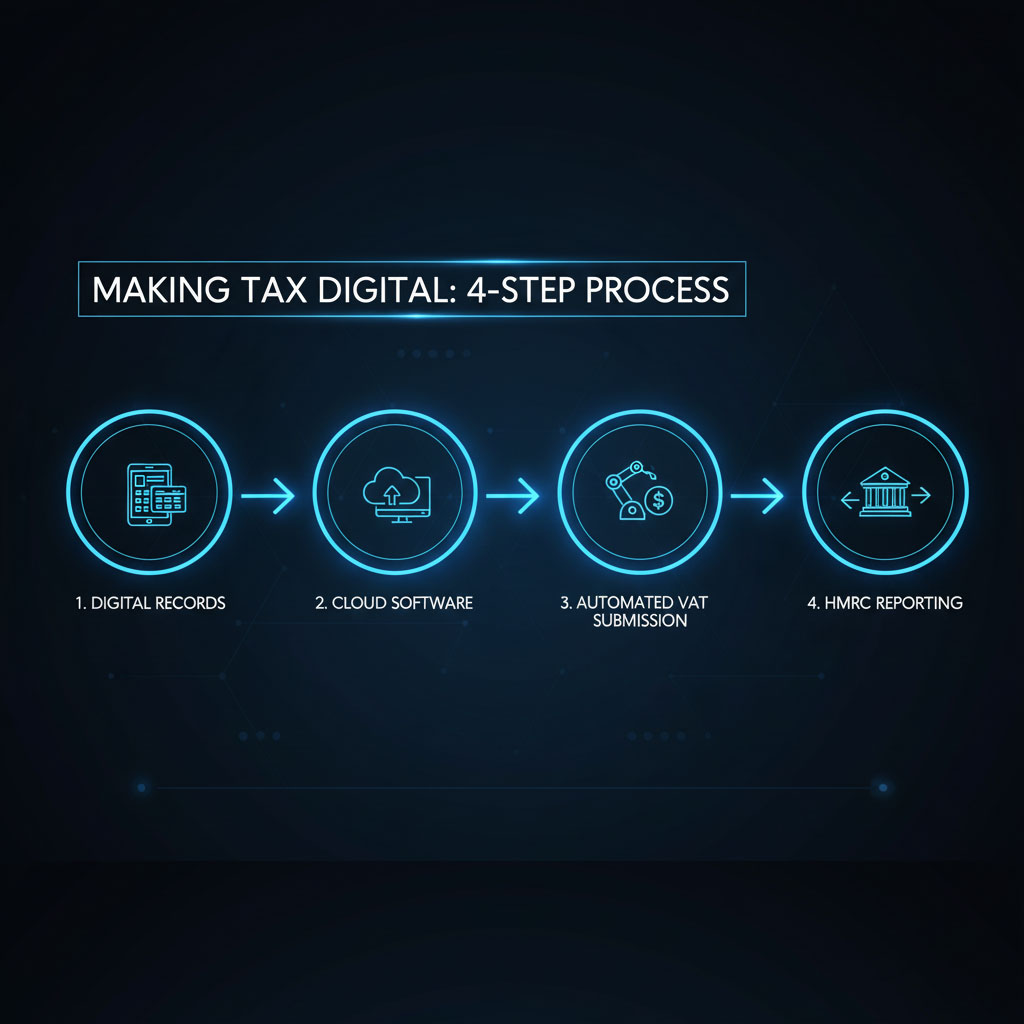
Cloud accounting platforms are HMRC-recognised for Making Tax Digital (MTD).
Purpose for accountants:
- Directly report VAT to HMRC
- Maintain digital records
- Track MTD deadlines
- Reduce compliance errors
This massively reduces the risk of penalties.
- Powerful Reporting & Forecasting Tools
Xero and QuickBooks include:
- Cash flow dashboards
- Profitability reports
- Budgeting tools
- Trend analysis
- Tax forecasting
Accountants use these insights to help clients plan ahead, cut costs, and optimise profitability.
- Enhanced Data Security
Cloud systems use encryption and automatic backups.
This is safer than desktop spreadsheets, which can be lost or corrupted.
Q: Why is cloud accounting better than spreadsheets?
Cloud accounting gives real-time data, automates admin tasks, syncs with bank accounts, and improves collaboration—making it more accurate and efficient than spreadsheets.
Making Tax Digital (MTD): What It Means & How Accountants Keep You Compliant
Making Tax Digital (MTD) is an HMRC initiative that requires businesses to keep digital records and submit tax returns using approved software such as Xero, QuickBooks, or FreeAgent.
What Are the MTD Requirements?
Under HMRC’s MTD rules, VAT-registered businesses — and soon income tax and corporation tax — must:
- Keep digital records of sales, expenses, VAT, and transactions
- Use MTD-compatible software to store and submit tax data
- Submit VAT returns digitally through approved platforms
- Maintain digital links between all financial tools and records
- Avoid manual data entry and spreadsheets for official filings
What this means: Your business must move away from manual bookkeeping and use cloud accounting tools to stay compliant.
How Accountants Help with Making Tax Digital (MTD)
Accountants make MTD simple and compliant:
Software Setup: Choose and install HMRC-approved tools like Xero, QuickBooks, FreeAgent, or Sage.
Record Migration: Safely transfer spreadsheets, desktop software, or manual records.
Digital Compliance: Organise receipts, automate bank feeds, and maintain a clean audit trail.
VAT Returns: Submit accurate, on-time returns directly to HMRC.
Ongoing Support: Monitor legislation, troubleshoot software, and keep records up to date.
Integrations: Connect banking, payroll, e-commerce, and receipt capture tools for automation.
Key Takeaway: Accountants ensure your records and VAT submissions stay fully digital, accurate, and HMRC-compliant.
Accountant Fees in the UK: What to Expect
accounting fees UK vary depending on services, business size, and complexity, but hiring a professional is an investment that can save you money.
Typical Price Ranges
- Individuals: £100–£500 for tax returns or simple bookkeeping
- Small businesses / SMEs: £500–£3,000 annually depending on complexity
- Large businesses / corporations: £3,000+ with full-service accounting and advisory support
Cost vs Value
Cheap accountants may miss deductions or make errors, while experienced professionals often save more than they cost by optimising taxes and financial planning.
Q: How much does an accountant cost in the UK?
A: Fees depend on complexity: £100–£500 for individuals, £500–£3,000 for small businesses, £3,000+ for larger firms. A qualified accountant can save you money—e.g., a small business spent £1,200 and recovered £4,000 in tax savings.
How Accountants Help UK Businesses Grow
Budgeting: Set targets, plan costs, monitor performance, adjust forecasts.
Cash-Flow Forecasting: Predict shortages, manage VAT/PAYE, handle late payments, maintain working capital.
Growth Strategy: Support pricing, expansion, hiring, funding, profit margins, and KPIs.
Exit Planning: Prepare accounts, maximise valuation, plan sales, mergers, or succession.
Key Takeaway: Accountants provide strategic advice beyond compliance to improve profitability, stability, and long-term success.
The Hidden Costs of DIY Accounting: Penalties, Fines & Compliance Risks
Penalties & Compliance Risks: DIY accounting can trigger HMRC fines for late or incorrect filings, VAT/MTD errors, and increase the chance of HMRC enquiries.
Missed Tax Deductions & Allowances: Without a professional accountant, businesses often miss allowable expenses like mileage, capital allowances, staff costs, and marketing, leaving money on the table.
Wasted Time & Stress: DIY bookkeeping consumes significant hours each month, taking focus away from sales, growth, and core business activities.
How Accountants Integrate Your Accounting Software With CRM, E-Commerce & Payroll Apps
CRM Integrations
Accountants sync your CRM with Xero/QuickBooks so invoices, payments, and customer data flow automatically between systems.
Result: Real-time payment tracking, cleaner debtor reports, and better cash-flow forecasting.
E-Commerce Integrations
Using tools like A2X or Link My Books, accountants automate sales, fees, refunds, and payouts.
Result: No manual spreadsheets, fewer VAT mistakes, accurate multicurrency reporting.
Payroll Integrations
Payroll journals, PAYE, NI, and pensions sync directly with your accounts.
Result: Zero manual entry and cleaner year-end payroll reporting.
Payment Gateways
Payments and fees are matched automatically to the right invoices.
Result: Faster reconciliation and accurate daily cash-flow visibility.
Industry Apps
Accountants integrate tools to streamline project costing, sales, and expenses.
Result: Real-time reporting with fewer errors.
Why These Integrations Matter
A connected system gives businesses:
- Real-time financial visibility
- Faster VAT returns
- Cleaner books with fewer errors
- 40–60% less admin time
- Better decision-making
Q: How do accountants integrate software with CRMs and ecommerce tools?
A: Accountants connect your CRM, ecommerce store, payroll app, and payment gateways directly to your accounting software. This automates sales, expenses, payroll entries, and payouts — reducing errors and giving real-time financial insights.
How to Switch Accountants: Simple Step-by-Step Guide
Step 1 — Decide & Inform
Tell your current accountant you’re switching and confirm start date and scope with the new accountant. Request final invoices and a handover plan.
Step 2 — Gather Key Documents
Collect essential records for the new accountant, including:
- Latest accounts, tax returns, VAT/PAYE records
- Bank statements, invoices, payroll info
- Contracts, loans, fixed-asset register
- Cloud software access or exported data
Step 3 — Transfer Access & Authorisations
Give the new accountant secure access to your accounting software and integrations. Complete HMRC agent authorisation so they can file VAT, PAYE, and taxes on your behalf.
Step 4 — Agree Responsibility for Immediate Filings
Decide who handles any upcoming VAT, payroll, or tax deadlines during the transition. Put agreements in writing to avoid confusion.
Step 5 — Review & Reconcile Accounts
Let the new accountant reconcile accounts, flag historic issues, and request missing documents. Prompt responses ensure a smooth takeover.
Step 6 — Confirm Handover & Keep Records
Get written confirmation that all records are transferred and reconciled. Close the old accountant’s access, settle outstanding invoices, and retain copies of all key documents for legal compliance.
Practical Checklist
- Written notice to current accountant.
- Signed engagement letter with new accountant (scope + fees).
- Handover checklist agreed and dated.
- Export: trial balance, management accounts, tax returns.
- Payroll & PAYE reports exported.
- VAT history & returns exported.
- Bank statements & reconciliations exported.
- Cloud software access invited to new accountant.
- HMRC agent authorisation completed for new accountant.
- Final invoice settled with old accountant.
- Old accountant’s access revoked.
Common Pitfalls & How to Avoid Them
- Pitfall: Giving the old accountant access removed too soon.
Fix: Only revoke access after you receive confirmation from the new accountant. - Pitfall: Missed statutory deadlines during handover.
Fix: Confirm who will file each pending return in writing before the cutoff. - Pitfall: Missing historical data or non-standard file formats.
Fix: Ask for full CSV/Excel exports and confirm any special codes or mappings. - Pitfall: Unexpected handover fees.
Fix: Ask both accountants for an estimate of handover or migration costs upfront.
Final Tips (Client-Focused)
- Always sign an engagement letter with the new accountant — it protects both sides.
- Prioritise accountants who offer secure cloud access and clear migration experience.
- Use the switch as an opportunity to clean up records and improve processes (move to Xero/QuickBooks if you haven’t yet).
- If HMRC enquiries exist, disclose them to the new accountant immediately — they can advise on the best approach.
Mini UK Case Studies: Real Results from Hiring an Accountant
Case Study: Small Retail Shop Saves £3,800 Through Correct Expense Claims
Business type: Independent boutique in Manchester
Issue: Owner filed taxes using spreadsheets and missed allowable expenses for two years.
What happened:
- Accountant reviewed receipts, stock payments, utilities, and card terminal fees.
- Identified £12,500 in unclaimed legitimate expenses.
- Re-submitted prior year returns under HMRC’s overpayment relief.
Outcome:
- £3,800 tax refund issued by HMRC.
- Switched to Xero; bookkeeping time reduced from 6 hours/week to 1 hour/week.
Key takeaway: Correct expense claims + cloud accounting = significant tax savings and less admin.
Frequently Asked Questions
Who needs an accountant in the UK?
Answer: Anyone with complex finances, a business, or tax obligations should consider an accountant. Freelancers, SMEs, and individuals with high-income or investments benefit the most.
How often should I meet my accountant?
Answer: It depends on your needs. Many businesses meet monthly or quarterly, while individuals may only need annual tax consultations. Regular contact ensures timely advice and compliance.
Can an accountant help with HMRC audits?
Answer: Yes. Accountants can represent you, prepare documentation, and provide expert guidance during audits, reducing stress and potential penalties.
What’s the difference between an accountant and a bookkeeper?
Answer: Bookkeepers record transactions, while accountants analyse financial data, prepare reports, and provide advice on taxes, compliance, and business strategy.
Are chartered accountants better than regular accountants?
Answer: Chartered accountants have advanced qualifications and can handle complex tax, auditing, and advisory tasks. For standard bookkeeping, a regular accountant may suffice, but for higher-level support, a chartered accountant is recommended.
Conclusion & Next Steps
Hiring the right accountant in the UK ensures your finances are accurate, compliant, and strategically managed. From tax returns and VAT submissions to payroll and financial planning, professional accountants save you time, reduce errors, and often save you money.
By understanding the types of accountants, their services, and fees, you can make an informed decision for your business or personal finances. Remember to check qualifications, experience, and reputation before hiring.
Next Steps
Decide whether you need one-off help or ongoing accounting support and contact an accountant for consultation to discuss your needs.