

Running a business in the UK is exciting — until the tax deadlines, receipts, and HMRC rules show up.
Many people have the same question: “What exactly does an accountant do?” Most self-employed people and small business owners only discover the real value of an accountant after a missed deadline, a surprise tax bill, or hours lost trying to “figure it out.”
Here’s the good news:
A qualified accountant can simplify your finances, keep you compliant, protect your profits, and give you the clarity you need to grow. This guide breaks it down in plain English — no jargon, no confusion — just a clear explanation of how an accountant helps with tax, bookkeeping, accounting, business registration, and HMRC compliance.
What Does an Accountant Do?
An accountant helps UK individuals and small businesses manage money, file taxes, stay compliant with HMRC, organise bookkeeping, prepare annual accounts, and set up new businesses. They make sure your finances are accurate, legal and optimised — helping you avoid mistakes, reduce tax bills, and save time.
Why UK Individuals & Small Business Owners Need an Accountant
Running a business is busy. Between serving customers, managing operations, and staying profitable, it’s easy to miss crucial financial tasks. That’s where accountants step in.
Common Reasons Business Owners Hire an Accountant
Business owners hire an accountant because they want to avoid HMRC penalties, get accurate help with tax returns, and keep their digital bookkeeping properly organised. When you understand what does an accountant do, it becomes clear why so many UK self-employed individuals rely on one: accountants help you track financial performance, register a new business, manage payroll or CIS correctly, reduce tax legally, and maintain real financial clarity throughout the year.
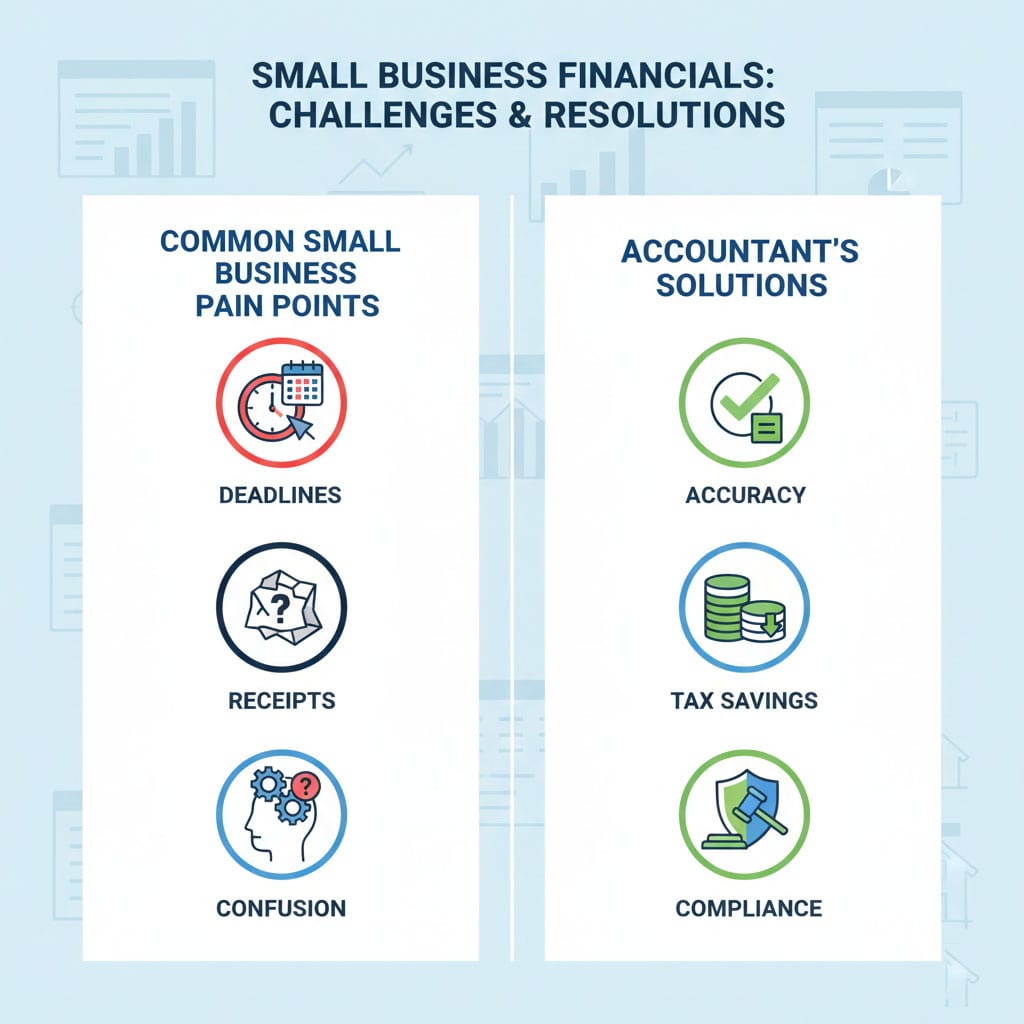
Pain Points Accountants Solve
- “I don’t have time for bookkeeping.”
- “I’m scared I’ll make a mistake with HMRC.”
- “I don’t know which expenses I can claim.”
- “I don’t understand cash flow.”
A good accountant removes stress, saves time, and guides your business decisions with accurate numbers.
UK individuals and small business owners need an accountant to stay compliant, save time, and reduce tax risks. Understanding what does an accountant do shows how they handle bookkeeping, tax returns, payroll, CIS, business registration, and financial performance tracking. Accountants solve common pain points like missed deadlines, HMRC mistakes, unclear expenses, and cash flow issues, giving business owners clarity, accuracy, and confidence in their financial decisions.
Core Duties of an Accountant
1. Tax Returns & HMRC Compliance
Short answer:
An accountant prepares and files your tax returns correctly and on time, making sure you pay the right amount — not more.
Services include:
- Self Assessment tax return preparation
- Corporation Tax (CT600) filing
- VAT registration & returns
- PAYE setup and submissions
- CIS filing for contractors
- HMRC correspondence and appeals
Why it matters:
One wrong figure can trigger penalties, stress, or an HMRC enquiry. Accountants protect you from that.
2. Bookkeeping & Record Keeping
Short answer:
An accountant keeps your financial records accurate, organised, and compliant.
What they handle:
- Categorising income & expenses
- Reconciling bank statements
- Tracking invoices & receipts
- Maintaining digital records
- Using tools like Xero, QuickBooks, FreeAgent
Good bookkeeping = better decisions and smoother tax filings.
3. Annual Accounts & Financial Statements
Short answer:
Accountants prepare your company’s annual accounts so you meet legal obligations and understand your business performance.
Includes:
- Profit & Loss statement
- Balance Sheet
- Year-end adjustments
- Management accounts
These documents help with loans, investors, tax planning, and forecasting.
4. Business Registration & HMRC Setup
Short answer:
Accountants guide you through setting up your business correctly, no matter which structure you choose.
What they do:
- Register a limited company with Companies House
- Register you for Self Assessment
- Set up VAT, PAYE, CIS
- Advise on the best structure (tax-efficient)
Example:
A freelancer earning £35k+ might save more tax by forming a limited company.
5. Payroll, CIS & Contractor Payments
Short answer:
If you have staff or subcontractors, accountants manage payroll, payslips, and HMRC submissions.
They handle:
- PAYE payroll
- Auto-enrolment pensions
- CIS deductions & filings
- RTI submissions
This avoids payroll errors and ensures legal compliance.
6. Tax Planning & Financial Strategy
Short answer:
Accountants help you legally reduce your tax bill by identifying reliefs, allowances, and efficient structures.
Includes:
- Expense optimisation
- Dividend strategy
- Capital allowances
- R&D relief
- Marriage allowance guidance
- VAT planning
This is where accountants save clients the most money.
7. Advice and Growth Guidance
Short answer:
Accountants share insights that make decision-making easier and help your business grow.
Their advisory includes:
- Cash flow forecasting
- Profit improvement plans
- Pricing strategy
- Budget planning
- Funding support
- Business scaling advice
They’re financial partners, not just number-crunchers.
Understanding what does an accountant do shows how they manage tax, bookkeeping, payroll, HMRC compliance, business registration, tax planning, and growth strategy. Accountants provide UK businesses with accurate records, legal compliance, cost savings, and strategic guidance, helping owners make informed decisions and focus on growing their business.
The Ways Accountants Help Various Clients
Self-Employed & Freelancers
Self Assessment: Ensures accurate filing and submission of tax returns, avoiding HMRC penalties.
Allowable expenses: Identifies all legitimate deductions to reduce taxable income.
Cash flow planning: Tracks income and expenses to maintain financial stability.
Moving from sole trader to Ltd: Helps you choose the most tax-efficient setup for growth.
Small Businesses
Payroll: Manages employee salaries, tax deductions, and pension contributions.
VAT returns: Handles the recording and timely submission of your VAT to HMRC.
Annual accounts: Prepares profit & loss statements and balance sheets for clear financial insight.
Staff cost planning: Provides guidance on salaries, hiring, and overhead management.
E-commerce Sellers
Marketplace income reconciliation: Tracks sales from Amazon, eBay, Shopify, etc., ensuring accurate reporting.
VAT on international sales: Calculates VAT obligations for overseas transactions.
Inventory accounting: Monitors stock costs and profitability for better decision-making.
Platform reports: Generates detailed financial insights from e-commerce platforms.
Contractors & Landlords
CIS: Manages Construction Industry Scheme deductions and filings for compliance.
Property income records: Maintains detailed records of rent and expenses.
Mortgage-ready accounts: Prepares accounts suitable for lenders and mortgage applications.
Expense compliance: Ensures all allowable expenses are correctly recorded to maximise tax efficiency.
Realising what does an accountant do shows how they help UK clients manage tax, bookkeeping, compliance, payroll, and financial reporting. From freelancers to small businesses, e-commerce sellers, contractors, and landlords, accountants provide expertise that saves time, reduces errors, and supports informed financial decisions.
What an Accountant Does Month-by-Month
Monthly
- Bookkeeping: Records all income and expenses accurately to maintain up-to-date financial records.
- Payroll / CIS: Processes employee salaries, subcontractor payments, and HMRC deductions correctly.
- Expense categorisation: Organises business costs to optimise tax deductions and reporting.
- Cash flow reports: Tracks incoming and outgoing funds to ensure smooth financial operations.
Quarterly
- Management accounts: Generates quarterly financial summaries for business performance insights.
- VAT returns: Makes sure your VAT is prepared and submitted on schedule so you avoid fines.
- Budget review: Compares actual spending versus planned budgets to guide financial decisions.
Yearly
- Self Assessment / Corporation Tax: Completes annual tax submissions accurately to HMRC.
- Company accounts: Prepares profit & loss statements and balance sheets for stakeholders and compliance.
- Year-end strategy meeting: Reviews financial performance and plans for tax efficiency and business growth.
Understanding what does an accountant do month-by-month shows how they maintain accurate bookkeeping, process payroll and CIS, submit VAT returns, manage budgets, prepare annual accounts, and guide strategic decisions. With this steady support, UK businesses stay compliant, organised, and financially healthy all year.
What’s the average price for an accountant in the UK?
| Service Type | Standard Fees (UK) | Notes |
| Self-employed | £20–£60 each month | Handles bookkeeping, tax filing, and basic guidance. |
| Small limited companies | £60–£150 per month | Includes bookkeeping, accounts, payroll, VAT |
| Payroll | £5–£10 per employee | HMRC-compliant payroll and reporting |
| VAT returns | £25–£50 per return | Submission and calculation of VAT to HMRC |
| Company formation | £50–£150 | Registration with Companies House and HMRC setup |
Note: The cheapest service isn’t always the best. Hiring an experienced accountant ensures your business stays compliant, avoids penalties, and maximises efficiency.
Realising what does an accountant do also helps you see the typical costs in the UK. Fees depend on business size and services required, ranging from £20/month for self-employed individuals to £150/month for small limited companies. Investing in the right accountant safeguards compliance and financial efficiency.
How to Select the Perfect Accountant: Complete Checklist
Look for These
UK-qualified (ACCA, ICAEW, AAT): Ensure the accountant has recognised UK credentials for reliability and expertise.
Defined fees: Knowing the cost upfront makes it easier to trust the service and plan your expenses.
Cloud software (Xero, QuickBooks): Modern accountants use digital tools for accurate, real-time bookkeeping and reporting.
Good communication: Work with accountants who check in often and are always accessible.
Industry experience: Choose someone familiar with your type of business for tailored advice.
Avoid These Red Flags
No credentials: Unqualified accountants may increase risk of errors or non-compliance.
Hidden fees: Beware of unclear pricing structures that can lead to unexpected costs.
No digital tools: Lack of cloud software can slow down reporting and limit efficiency.
Slow response times: Delayed communication can result in missed deadlines or lost opportunities.
Generic one-size-fits-all solutions: Accountants should offer personalised advice, not a standard approach for all clients.
Quick Answers
- What an Accountant Actually Does?
An accountant manages your tax, bookkeeping, accounts, payroll, and HMRC compliance. - Do I need an accountant for Self Assessment?
It’s optional, but hiring an accountant helps most people avoid mistakes and save on tax. - Can an accountant register my business?
Yes, they handle company formation, VAT, PAYE, CIS and Self Assessment. - Do accountants help save tax?
Yes, through legal tax planning and optimising expenses. - Is bookkeeping the same as accounting?
No — bookkeeping records data, accounting analyses and uses it for decisions.
Voice Search FAQ
Q: What does an accountant do in the UK?
An accountant helps with tax, bookkeeping, accounts, payroll, and HMRC compliance.
Q: Is It Necessary for Sole Traders to Use an Accountant?
Not legally, but it saves time and reduces the chance of errors.
Q: Can an accountant help with VAT?
Yes — they register, calculate and file VAT returns.
Q: How much does an accountant cost monthly?
Most small UK businesses pay between £30 and £150 per month.
Q: Can an accountant help me start a business?
Yes — they set up your business structure and handle HMRC registrations.
Case Study
Background:
Sarah is a self-employed graphic designer operating in Manchester. Before hiring an accountant, she struggled to keep track of client invoices, receipts, and VAT thresholds. Late payments and missed receipts caused stress during tax season, and she often spent hours trying to reconcile her finances manually.
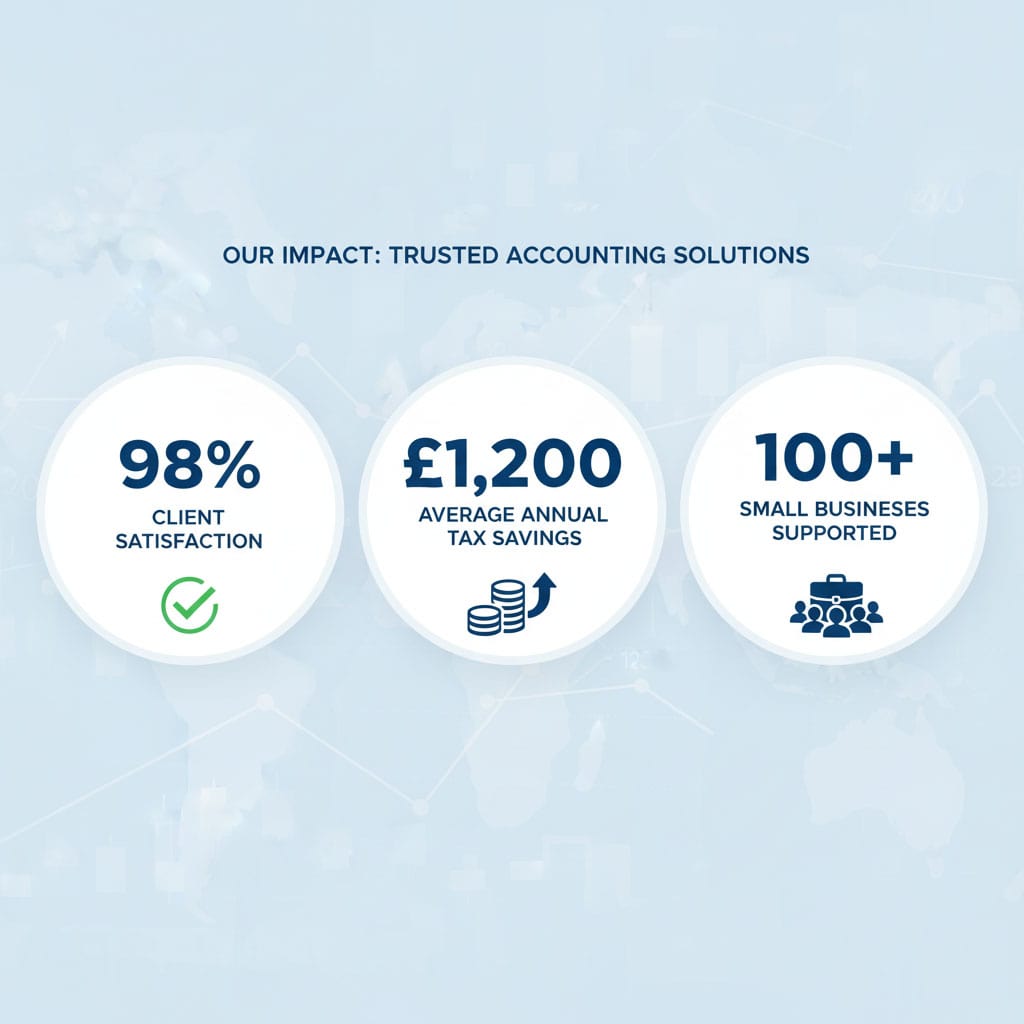
After hiring a UK-qualified accountant, Sarah’s bookkeeping was migrated to Xero, allowing her to track income and expenses in real time. Her VAT returns were calculated and submitted quarterly, eliminating the risk of penalties. The accountant also reviewed her expenses and identified overlooked deductions, saving her £1,200 per year.
With these systems in place, Sarah no longer worried about HMRC deadlines or filing errors. She gained clear insights into her monthly cash flow and could focus on designing, acquiring new clients, and growing her business. The accountant became not just a compliance partner but a trusted advisor who provided strategic financial guidance.
Key Takeaways:
- Switching to digital accounting reduces errors and saves time.
- Professional advice uncovers tax-saving opportunities.
- Accurate bookkeeping and VAT management lower stress and improve business focus.
- Accountants provide both compliance and strategic growth support for self-employed individuals.
Conclusion
Accountants do far more than just file taxes. Understanding what does an accountant do helps UK business owners see their full value. They take care of financial organisation, accurate bookkeeping, and HMRC obligations so you don’t face unnecessary errors or charges. Accountants also help minimise tax legally, manage payroll, and prepare annual accounts, giving a clear picture of business performance.
Beyond compliance, they provide strategic advice to support business growth, cash flow planning, and financial decision-making. A good accountant gives self-employed individuals and small business owners clarity, confidence, and freedom from tax and admin worries.
Take action today: Book a consultation and see how the right accountant can save you time, money, and unnecessary stress. Your business deserves clarity and confidence.