
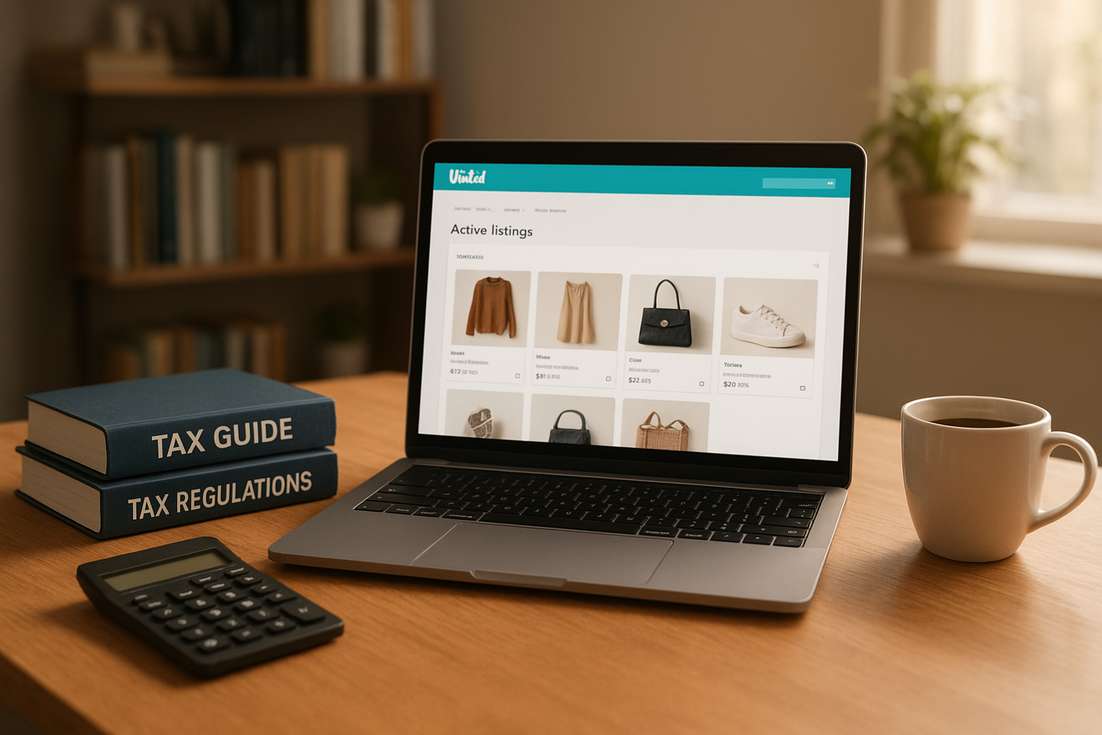
Selling your old clothes or second-hand items on Vinted is more popular than ever in the UK. But with new HMRC data-sharing rules and a £1,000 tax-free allowance, when do you actually have to pay tax? This guide covers everything UK online sellers need to know about tax on Vinted sales, including the 2026/27 and 2027/28 tax years. Avoid surprise penalties and stay HMRC-compliant — whether you’re decluttering, side hustling, or running a business. We explain the rules in plain English and share practical steps, real client examples, and the latest HMRC updates. By the end, you’ll know exactly how to keep your Vinted sales tax-efficient and penalty-free.
Key Takeaways
- Most Vinted users selling personal items pay no tax if under the £1,000 trading allowance.
- HMRC receives online sales data from Vinted and other platforms from 2024 onwards.
- Business sellers or frequent traders may need to register for Self Assessment.
- Late or incorrect reporting can trigger £100+ HMRC penalties.
- Professional accountants can save time, reduce errors, and help you claim allowances.
Why Trust This Guide?
Thousands of UK sellers rely on Tax Return Accountants for clear, up-to-date advice on Vinted and online selling tax rules.
- ICAEW regulated and AAT accredited
- 15+ years supporting UK businesses
- 500+ UK businesses supported since 2009
- Rated 4.9/5 on Google Reviews
- Fixed fees from £7.50/month
- Last reviewed: July 2026.
Selling on Vinted Tax: UK Rules, Allowances & Reporting Explained
This article breaks down the latest tax rules for selling on Vinted in the UK, including HMRC allowances, penalties, and what to do if you sell above the £1,000 threshold. You’ll find practical answers for casual sellers, side hustlers, and anyone running an online resale business.
Need help with Vinted or online selling tax? Call 0116 4030595 or email info@taxreturnaccountants.uk for a free, no-obligation consultation with an ICAEW/AAT qualified accountant.
Selling on Vinted Tax: Do You Need to Pay Tax on Second-Hand Sales?
Over 800,000 HMRC late filing penalties were issued to UK online sellers in 2024/25 (source: GOV.UK).
Most people believe that if they’re just clearing out their wardrobe on Vinted, tax isn’t a concern. In reality, the answer depends on whether your sales are personal, for profit, or cross key thresholds. For the 2026/27 and 2027/28 tax years, the £1,000 trading allowance remains the dividing line. If your total income from selling clothes online in the UK stays below this, you won’t pay income tax — but if you buy items to resell, or your sales are frequent and organised like a business, HMRC may class you as a trader.
It’s a common misconception that all second-hand sales are tax-free. If you sell a designer bag for more than £6,000, capital gains tax could apply to the profit above your annual exemption. For most, this isn’t relevant, but high-value sellers must be aware.
HMRC now receives sales data directly from Vinted and other digital platforms. If you exceed the 30 sales or £1,700 revenue threshold, your details are reported automatically. This doesn’t always mean you owe tax, but it does mean HMRC can check your activity against your tax returns.
Don’t assume personal sales are invisible to HMRC.
Quick Tip: Keep a simple record of all your Vinted sales and purchases — even if you think you’re under the threshold. This protects you in case of an enquiry.
What counts as a taxable sale?
If you sell your own used items for less than you paid, there’s usually no profit to tax. But if you buy items to resell, or sell frequently, HMRC may consider you “trading” and require you to declare income, even if you think of it as a side hustle.
Personal use vs. trading for profit
Occasional sales of your own clothes are different from buying stock to resell. The line between casual and trading is blurred, but frequency, intent, and organisation matter. If you advertise, buy specifically to resell, or reinvest profits, you are likely trading for profit.
Capital Gains Tax on high-value items
Selling an individual item for more than £6,000 (such as a rare watch or designer bag) could trigger capital gains tax on the profit, after your annual exemption (£3,000 for 2026/27). This rarely applies to clothes, but keep receipts if you think it might. For more on Self Assessment, see our Self Assessment Service.
What is Self Assessment?
Self Assessment is HMRC’s system for individuals and businesses to declare and pay tax on income not taxed at source, including online sales above the £1,000 allowance.
For more guidance, the official GOV.UK resource is here.
HMRC Rules for Online Selling: Allowances, Reporting, and Pitfalls
HMRC now receives data from Vinted, eBay, and other digital platforms for sellers with 30+ sales or £1,700+ in revenue per year (source: GOV.UK, 2024/25).
- Every UK resident has a £1,000 trading allowance for online sales each tax year — this covers all platforms combined.
- If your online sales income goes above £1,000, you must declare it to HMRC, even if you made a loss.
- Vinted must report you to HMRC if you make 30+ sales or earn over £1,700 in a calendar year.
- Failing to declare income over the trading allowance can trigger a £100 penalty on day 1 late, then £10/day after 3 months, and further penalties at 6 and 12 months.
- Many sellers are caught out by not realising the allowance is a total — not per platform.
What most guides fail to mention: If you sell on both Vinted and eBay, your sales are combined for the £1,000 allowance. This detail is often overlooked, leading to accidental breaches and unexpected penalties.
Below is a quick comparison of the main HMRC online selling rules for 2026/27 and 2027/28:
| Rule | 2026/27 Tax Year | 2027/28 Tax Year |
|---|---|---|
| Trading Allowance | £1,000 | £1,000 |
| Platform Reporting Threshold | 30 sales / £1,700 | 30 sales / £1,700 |
| Self Assessment Deadline (Online) | 31 Jan 2028 | 31 Jan 2029 |
| Late Filing Penalty | £100 + £10/day after 3 months | £100 + £10/day after 3 months |
Missing these deadlines can be costly. In our experience, most Vinted sellers who are penalised simply didn’t realise their total sales exceeded the allowance when combining platforms.
Quick Tip: Use a spreadsheet or app to track ALL your online sales — not just Vinted. This helps ensure you stay below the allowance or declare income correctly.
For bookkeeping support, see our Bookkeeping Service.
For the latest HMRC guidance, visit GOV.UK.
How Much Can I Sell Online Before Paying Tax UK? Trading Allowance & Side Hustles Explained
| Scenario | Do You Pay Tax? | Action Required |
|---|---|---|
| Selling personal clothes under £1,000 total (all platforms) | No | Keep records, no need to declare |
| Trading for profit, £1,200 total income | Yes | Register for Self Assessment |
| Sold a single item for £7,000 (profit £4,000) | Maybe (CGT) | Declare on tax return |
| Side hustle, £2,400 sales (Vinted + eBay) | Yes | Declare total income, claim expenses |
The £1,000 trading allowance applies to all online sales, whether you sell on Vinted, eBay, Depop, or elsewhere. This is not a per-platform allowance. If you earn £600 on Vinted and £700 on eBay, your total is £1,300 — you must declare income above the allowance.
A Manchester-based side hustler sold £2,400 of used clothes on Vinted and eBay in 2026/27. After deducting the £1,000 allowance, £1,400 was taxable. With advice from Tax Return Accountants, they claimed £250 in allowable expenses, reducing tax owed and avoiding a £100+ penalty by filing on time.
If you run a side hustle or small business, the rules are the same: income above £1,000 must be declared, even if you also work full-time. For full pricing, see our Accountant Pricing page.
Many sellers think the allowance resets per app. It doesn’t — HMRC looks at your total online sales income.
HMRC Warning: If you exceed the trading allowance and don’t declare income, you risk penalties, interest, and an HMRC enquiry.
For more, see: GOV.UK: Declare your online sales.
Declaring Online Income: Self Assessment for Online Sellers UK
Imagine a Birmingham seller who made £1,200 on Vinted in 2026/27 and ignored the reporting rules. They received a letter from HMRC in autumn 2027, asking for clarification and evidence of their sales. With no records, they faced a £100 penalty and had to estimate their profit, paying more tax than necessary. Here’s how to avoid that situation:
- Register for Self Assessment by 5 October after your first tax year above the allowance.
- Paper tax return deadline: 31 October after tax year end; online return deadline: 31 January after tax year end (e.g. for 2026/27, file online by 31 Jan 2028).
- Declare all online sales income above £1,000, including side hustles and business trading.
- Claim allowable expenses (postage, packaging, selling fees) to reduce your taxable profit.
- Keep digital and paper records of all sales and costs for at least 5 years after the 31 January filing deadline.
- Penalties for late filing: £100 fixed on day 1, £10/day after 3 months, 5% of tax due or £300 (whichever greater) at 6 and 12 months, plus interest on unpaid tax.
- If you make an honest mistake, you can amend your return within 12 months of the deadline to correct it.
Quick Tip: Register for Self Assessment as soon as you realise you’ll exceed the allowance — don’t wait for HMRC to contact you.
For expert help, see our Self Assessment Service or read the official guidance at GOV.UK.
Online Marketplace Tax Rules UK: Platform Reporting, HMRC Data, and MTD
From January 2025, Vinted and other digital platforms are legally required to share sales data with HMRC for any seller with 30+ sales or £1,700+ in revenue (source: GOV.UK, 2024/25).
This change means HMRC can cross-check your declared income with data received from online marketplaces. If there’s a mismatch, you could receive an enquiry letter or penalty notice. Many sellers are unaware that this reporting is now automatic and applies even if you only sell for part of the year.
Making Tax Digital for Income Tax (MTD ITSA) will require digital records and quarterly submissions for online sellers with £50,000+ income from April 2026, £30,000+ from April 2027, and £20,000+ from April 2028. Even if you’re not above these thresholds yet, using MTD-ready software like Xero, QuickBooks, FreeAgent, or Sage Accounting now will make compliance easier.
- Vinted, eBay, Depop and similar must share your sales data with HMRC if you meet reporting thresholds.
- MTD ITSA is rolling out from April 2026 — plan ahead if your online sales are growing.
- Digital record keeping is now best practice, even for casual sellers.
- Accurate records help you prove sales are personal, not for profit, if HMRC asks.
Quick Tip: Start using MTD-compliant software early. It makes Self Assessment easier and prepares you for future HMRC requirements.
For more on digital tax, see our Making Tax Digital Service or visit HMRC.
What is Making Tax Digital?
Making Tax Digital (MTD) is a government initiative requiring digital record keeping and tax submissions for businesses and some individuals, including online sellers above set income thresholds.
Tax Implications of Selling Second Hand Items UK: Allowances, VAT, and Capital Gains
Most private online sellers are exempt from VAT, as the threshold for VAT registration rose to £90,000 in April 2024 (source: GOV.UK).
For nearly all Vinted users, VAT is irrelevant — unless you run a business with turnover above £90,000. However, if you sell high-value items for more than £6,000 each, capital gains tax may apply to the profit above your annual exemption (£3,000 for 2026/27). This is rare for clothing, but not impossible for luxury bags, watches, or collectibles.
It’s a common misconception that you never need to keep receipts for second-hand sales. Actually, if you sell frequently or for profit, or sell high-value items, HMRC may ask for evidence of purchase price and sale proceeds. Failing to provide this can lead to tax being calculated on the full sale amount, not just the profit.
Record keeping is your best defence. Even for casual sales, keeping a simple log of what you sold, for how much, and when, can save you stress if HMRC asks questions later.
Quick Tip: Keep digital photos of high-value items and their original purchase receipts — this helps prove your cost if you ever need to calculate capital gains.
For VAT support, see our VAT Returns Service or check GOV.UK VAT guidance.
What is Capital Gains Tax?
Capital Gains Tax (CGT) is a tax on the profit when you sell an asset, such as a valuable item, for more than you paid for it. It only applies above certain thresholds.
Reporting Online Sales to HMRC & Income Tax for Side Hustles UK: What If I Get It Wrong?
- Late or incorrect reporting of Vinted income can trigger a £100 fixed penalty on day 1 late, £10 per day after 3 months, and further penalties at 6 and 12 months.
- The most common mistakes are missing the combined £1,000 threshold, poor record keeping, and assuming “side hustles” are always tax-free.
- DIY tax returns are possible, but the risk of error is high, especially if you sell on multiple platforms or claim expenses.
- Professional accountants can often save you more than their fee by optimising your allowances and avoiding penalties.
Below is a comparison of DIY vs. professional accountancy for Vinted sellers:
| Factor | DIY | Professional |
|---|---|---|
| Cost | £0-£150 | £100-£800+ |
| Time Required | 5-10 hours | 1-2 hours |
| Error Risk | High | Low |
| Tax Planning | Minimal | Maximised |
| HMRC Penalty Risk | Increased | Reduced |
In our experience, a Nottingham-based Vinted seller who missed the reporting threshold incurred a £100 penalty and lost out on £200 of claimable expenses. After switching to Tax Return Accountants, they saved over £300 in the following tax year by correctly reporting and planning their sales.
HMRC Warning: Once HMRC receives your sales data from Vinted, they may send an enquiry letter if your tax return doesn’t match. Always check your figures before submitting.
For a quote, see our Accountant Pricing page or check ICAEW’s directory.
Common Mistakes to Avoid
- Not declaring income over £1,000: Exceeding the allowance but failing to file a return triggers penalties and interest. £100 fixed, £10/day after 3 months, escalating after 6 and 12 months
- Not tracking total sales across all platforms: HMRC combines Vinted, eBay, Depop and more for the £1,000 limit.
- Missing Self Assessment registration deadlines: Failing to register by 5 October after your first trading year can lead to late filing penalties.
Local Accountancy Support for Online Sellers: How to Find an Accountant Near You
| City/Region | Vinted Tax Expertise | Contact |
|---|---|---|
| Leicester | Specialist support for local sellers and side hustlers | Tax Return Accountants, 6 Egginton Street, Leicester, LE5 5BA, 0116 4030595 |
| London | Online selling and Self Assessment expertise | ICAEW/AAT registered local accountants |
| Birmingham | Support for Vinted and eBay sellers, tailored advice | Chartered accountant near me |
| Manchester | Online marketplace tax rules UK specialists | Local accountant UK |
| Nottingham | Help with declaring online income to HMRC | East Midlands accountant |
| East Midlands | Regional knowledge and national online support | Tax Return Accountants, 0116 4030595 |
Choosing the right accountant is key to staying compliant and maximising your tax-free allowance for online sales in the UK. Whether you prefer a local accountant or a national online service, always check for ICAEW or AAT registration, positive Google reviews, and experience with online seller tax.
Leicester: Tax Return Accountants offers in-person and online support from our base at 6 Egginton Street, Leicester, LE5 5BA. London, Birmingham, Manchester, Nottingham, and the wider East Midlands are all covered by our UK-wide service.
For company owners, our Limited Company Accountants service covers Corporation Tax, VAT and more.
Quick Tip: Always ask your accountant if they have experience with Vinted, eBay, and other online selling platforms — rules can be different from traditional retail businesses.
How to Verify an Accountant
| Check | Why It Matters |
|---|---|
| ICAEW Registration | Regulation |
| Practising Certificate | Legal permission |
| Professional Indemnity Insurance | Client protection |
| Google Reviews | Reputation |
| Engagement Letter | Service clarity |
| HMRC Agent Status | HMRC representation |
Always verify your accountant’s credentials before sharing financial details or appointing them as your HMRC agent.
5-Step Accountant Selection Process
- Identify your needs: Are you a casual seller, side hustler, or running a business?
- Shortlist 3 accountants: Compare local and online options for Vinted tax expertise.
- Verify regulation: Check for ICAEW, AAT, or ACCA registration.
- Compare pricing: Get quotes and ask about fixed fees.
- Book consultation: Speak directly to assess fit and ask about experience with online selling tax.
Questions Accountants Should Ask You
- Are you VAT registered?
- Do you employ staff?
- Do you receive dividends?
- Do you own rental property?
- Do you expect income growth?
These questions help tailor advice and ensure all your income sources are compliant with HMRC rules for online selling.
When to Change Accountant: 5 Warning Signs
- Slow communication
- Filing errors
- Missed deadlines
- Lack of tax planning
- No MTD support
If you spot these issues, consider changing to a regulated firm like Tax Return Accountants for peace of mind.
DIY vs Professional Accountant for Vinted Sellers
| Factor | DIY | Professional |
|---|---|---|
| Cost | £0-£150 | £100-£800+ |
| Time Required | 5-10 hours | 1-2 hours |
| Error Risk | High | Low |
| Tax Planning | Minimal | Maximised |
| HMRC Penalty Risk | Increased | Reduced |
Professional accountants often pay for themselves in saved tax and reduced risk, particularly as rules for online selling become more complex.
Software Comparison for Online Sellers
Choosing the right accounting software is vital for MTD compliance and stress-free Self Assessment. Here’s how the main options stack up:
| Software | MTD Ready | Ease of Use | Cost |
|---|---|---|---|
| Xero | Yes | Easy | £12-£30/month |
| QuickBooks | Yes | Easy | £8-£28/month |
| FreeAgent | Yes | Very Easy | Free with certain banks |
| Sage Accounting | Yes | Moderate | £14-£28/month |
All four are MTD compliant. FreeAgent is often free if you bank with NatWest, RBS, or Mettle. Choose based on your budget and comfort with digital tools.
Industries: Vinted Tax for Contractors, Freelancers, Landlords, Ecommerce, and More
Contractors: What You Need to Know
If your main business is contracting but you also sell on Vinted, remember that online sales count toward your total income. This can affect your tax code and MTD obligations. For company contractors, see our Limited Company Accountants service.
Freelancers and Sole Traders
Freelancers often have irregular income. Even if you sell personal items, frequent sales can be classed as trading. Declare all income and keep detailed records. For tailored support, see our Freelance Accountants service.
Landlords: Property Tax Records
Landlords selling surplus furniture or appliances on Vinted should keep these sales separate from rental income. If you regularly sell, HMRC may view it as a business activity. For more, see our Landlord Accountants page.
Ecommerce Sellers
High-volume Vinted or eBay sellers may need to register as a business and pay VAT if turnover exceeds £90,000. Accurate bookkeeping and digital records are essential for compliance.
Construction, Healthcare, and Taxi Drivers
Professionals in these sectors often have side hustles. If you sell online alongside your main job, declare all income to avoid breaching the £1,000 trading allowance. For payroll and tax planning, see our Payroll Service.
UK Accountancy Statistics
- Over 93,000 chartered accountants in the UK (ICAEW, ACCA, CIMA, AAT)
- 1.5 million+ businesses enrolled in Making Tax Digital (source: HMRC)
- 800,000+ HMRC late filing penalties issued in 2024/25 (source: GOV.UK)
- 62% of UK SMEs use an external accountant (source: ONS)
Frequently Asked Questions
How much should I pay an accountant?
Fees for Vinted sellers range from £100 to £800+, depending on complexity and services required.
Is a chartered accountant worth it?
Yes — they offer regulated advice, error reduction, and can often save you more in tax than their fee.
Can I switch accountants mid-year?
Yes, you can switch at any time, but coordinate to avoid missed deadlines or data gaps.
How do accountants save money on tax?
By optimising allowances, spotting reliefs, and ensuring correct reporting to avoid penalties.
Should a sole trader use an accountant?
Most benefit from an accountant, especially if income exceeds the trading allowance or business grows.
Can an accountant deal with HMRC for me?
Yes, with HMRC agent status, your accountant can file and communicate with HMRC on your behalf.
Why Choose Tax Return Accountants?
- ICAEW regulated
- AAT accredited
- Fixed fees from £7.50/month
- MTD compliant and digital-ready
- Dedicated accountant for every client
- UK-wide online service
- Leicester based, local support available
- Free initial consultation
Want to know exactly what you’ll pay? Call 0116 4030595 for a free, no-obligation quote or email info@taxreturnaccountants.uk today.
Expert Commentary: Tax Return Accountants’ Perspective
According to our ICAEW-qualified team at Tax Return Accountants: “Many Vinted sellers are unaware of the new HMRC reporting rules and the £1,000 trading allowance. Accurate record keeping is now crucial, even for casual sellers.”