
Selling on Vinted is booming, but do you need to pay tax on your sales? Confused about HMRC rules for selling clothes or second-hand items online? In 2026/27, over
Key Takeaways
- Most personal Vinted sales are tax-free under the £1,000 trading allowance.
- Regular or profit-driven sellers must register for Self Assessment and declare income.
- HMRC receives your Vinted sales data if you sell over 30 items or £1,700+ per year.
- Late reporting risks a £100 fine, plus further daily and percentage penalties.
- Professional advice can help you stay compliant and avoid HMRC investigations.
Why Trust This Guide?
Thousands of UK online sellers rely on Tax Return Accountants for clear, practical guidance on Vinted and marketplace tax rules:
- ICAEW regulated and AAT accredited
- 15+ years supporting UK businesses
- 500+ UK businesses supported since 2009
- Rated 4.9/5 on Google Reviews
- Fixed fees from £7.50/month
- Last reviewed: July 2026.
Tax on Vinted Sales UK: Do You Need to Pay?
Wondering if you owe tax on your Vinted sales? This guide breaks down the rules, thresholds, and HMRC procedures so you can sell with confidence and avoid costly mistakes.
Need help with Vinted tax or reporting online income? Call 0116 4030595 or email info@taxreturnaccountants.uk for a free, no-obligation consultation.
Do You Pay Tax on Vinted Sales in the UK?
For most people, selling second-hand clothes or personal items on Vinted is tax-free. HM Revenue & Customs (HMRC) recognises that casual sales of personal belongings—such as old clothes, shoes, or household goods—are not taxable if you are simply clearing out unwanted items. However, the situation changes if you sell regularly, buy items specifically to resell, or treat selling as a business. In these cases, your income may be taxable, and you could be required to register for Self Assessment.
The key threshold is the £1,000 trading allowance for online sales. This allowance covers the total income from all online platforms—Vinted, eBay, Depop, and others—combined in a single tax year (6 April to 5 April). If you stay below this allowance and are not trading for profit, you do not need to declare your income or pay tax.
But if you sell more than £1,000 worth of items, or your selling activity looks like a business (multiple listings, buying stock, regular sales), you must declare your income to HMRC. This applies even if your sales are split across different platforms. Exceeding the allowance or crossing the “trading” line means you need to register for Self Assessment and may owe income tax and National Insurance.
Quick Tip: Combine all your online sales—Vinted, eBay, Depop—when checking if you’ve exceeded the £1,000 allowance. HMRC treats them as one total.
Most sellers do not pay tax on selling clothes in the UK unless they exceed the £1,000 threshold or sell for profit.
What is Self Assessment?
Self Assessment is HMRC’s system for individuals to report income outside PAYE, such as from self-employment or online sales, and pay tax due.
If you’re unsure whether your selling activity counts as trading, look at the “badges of trade”—frequency, intent to make profit, and how you source items. Occasional sales of your own used clothes are not trading. But buying stock to resell, or selling large volumes, is.
Imagine a Vinted user in Birmingham selling 40 items in 2026/27 and earning £1,900. They must declare this income, as they’ve exceeded both the £1,000 allowance and the 30-item reporting threshold.
For more details on Self Assessment registration, see our Self Assessment Service or check the official GOV.UK guidance.
When Vinted sales are tax-free
If you sell unwanted personal items occasionally and make less than £1,000 in total online sales in a tax year, you do not pay tax. This applies to most casual Vinted sellers.
When Vinted sales are taxable
If you buy items to resell, sell regularly for profit, or exceed the £1,000 allowance, your income is taxable and must be reported to HMRC.
Examples: personal vs. trading activity
Selling a few old dresses from your wardrobe: not taxable. Buying bundles at car boot sales to resell on Vinted: taxable trading, even if you make a loss overall.
Understanding HMRC Rules for Selling Online in the UK
HMRC’s online selling rules are more rigorous than most people realise.
- From January 2024, platforms like Vinted must share your sales data with HMRC if you sell 30+ items or earn over £1,700 in a tax year.
- There is no new tax on online selling, but reporting and compliance requirements have increased.
- If you cross the thresholds, HMRC may contact you—even if you believe your sales are personal.
- Failing to declare taxable income can trigger automatic penalties and, in some cases, an HMRC enquiry.
- Tax-free allowance for online sales in the UK remains £1,000 per tax year.
It’s vital to understand these rules, especially as Vinted and other platforms now send your sales information directly to HMRC. This means even if you think your sales are “under the radar,” HMRC may already know your figures.
Below is a table showing the key online marketplace tax reporting thresholds and what triggers HMRC’s attention:
| Trigger | Threshold | Action Required |
|---|---|---|
| Number of items sold | 30+ per tax year | Platform reports to HMRC |
| Sales value | £1,700+ per tax year | Platform reports to HMRC |
| Total online sales (all platforms) | £1,000+ per tax year | Declare via Self Assessment |
If you receive a notification from Vinted about HMRC reporting, don’t ignore it. It’s not a tax demand, but a prompt to check whether you need to declare your income. If you’re already over the £1,000 threshold, act quickly to register for Self Assessment and avoid penalties.
Quick Tip: HMRC deadlines for online sellers: Register by 5 October after your first trading year. File online by 31 January after the tax year ends.
Unlike most guides, we highlight that the reporting threshold is not just about value—selling 30 items, even if each is low value, can trigger HMRC data sharing. This is a key difference from previous years.
For more on digital tax compliance, see our Making Tax Digital Service or official HMRC guidance.
How Much Can You Sell Before Paying Tax on Vinted?
| Allowance/Threshold | Amount (2026/27 & 2027/28) | What Happens If You Exceed? |
|---|---|---|
| Tax-free trading allowance (all platforms) | £1,000 | Register for Self Assessment, declare income |
| Vinted platform reporting | 30 items or £1,700 | Vinted reports sales to HMRC |
| Income tax threshold (personal allowance) | £12,570 | Income tax due on total income above this |
| National Insurance (Class 2/4) | £6,725 (profits) | NI due above this level |
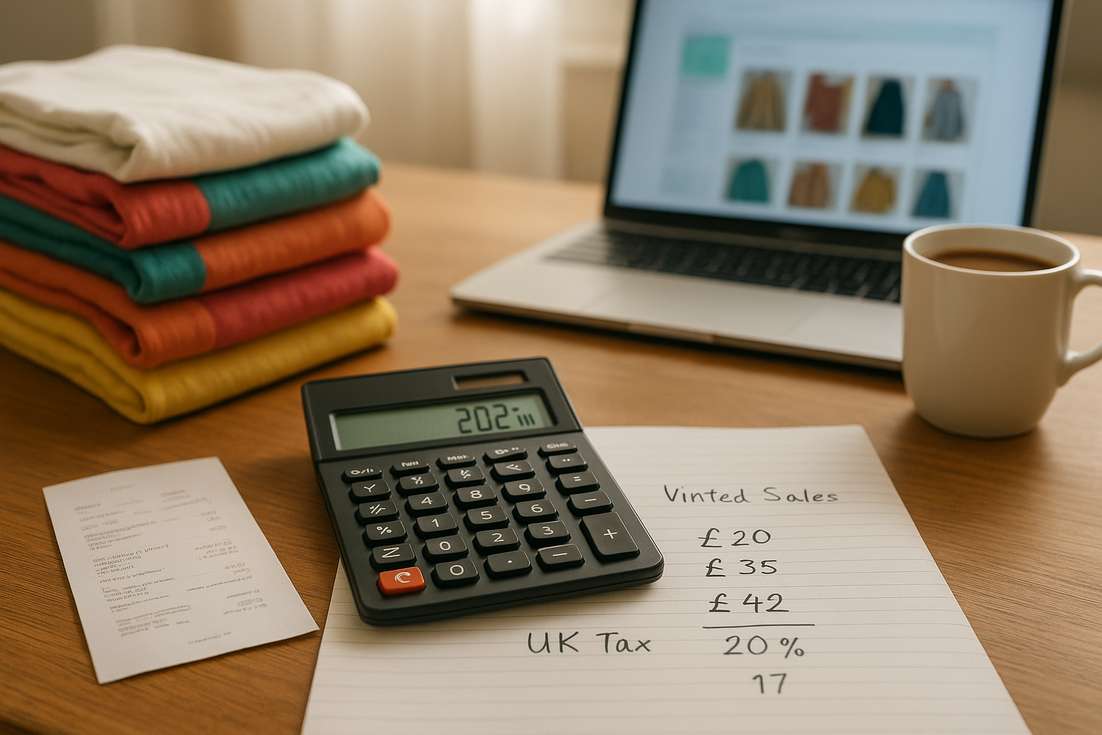
Many Vinted users ask: “How much can you sell before paying tax in the UK?” The answer is £1,000 in total online sales per tax year, across all platforms. This is called the tax-free allowance for online sales. If you sell over £1,000, you must declare the income—even if you think of it as a hobby.
Here’s where most people get caught out: the allowance is not per platform. If you sell £600 on Vinted and £600 on eBay, your total is £1,200—over the limit. You must register for Self Assessment and report all your online income.
Once you exceed the allowance, income tax may be due at 20% (basic rate) on profits above your personal allowance (£12,570 for 2026/27 and 2027/28). If your profits from online selling exceed £6,725, you’ll also pay Class 2 or Class 4 National Insurance.
It’s important to distinguish between hobby sales and trading. If you’re selling for fun, with no intention to make profit, you may still need to declare if you exceed the allowance. But if you buy to resell or sell regularly, you are trading for tax purposes, and HMRC expects a full declaration.
Warning: If you exceed the £1,000 allowance and do not declare, HMRC can issue a £100 penalty immediately, plus daily fines and interest.
For up-to-date accountancy fees, see our Accountant Pricing page or speak to an adviser.
Reporting Online Income to HMRC: What Vinted Sellers Need to Know
Imagine a part-time Vinted seller in Manchester who sells £1,200 worth of clothes in 2026/27. What steps should they take?
- Declare your income to HMRC if you earn over £1,000 from all online sales in a tax year.
- Register for Self Assessment by 5 October after the end of your first trading tax year.
- Keep records of all sales, expenses, and fees—even for small amounts.
- Submit your Self Assessment tax return by 31 January following the end of the tax year (online deadline).
- Pay any tax due by 31 January to avoid penalties and interest.
- If you miss the deadline, a £100 penalty applies immediately, with further daily and percentage fines after 3 and 6 months.
- Consider using accounting software or a professional to streamline the process and reduce the risk of errors.
Quick Tip: If you’ve missed a deadline, file your return as soon as possible. Late payment interest accrues daily, so acting fast limits extra charges.
In our experience, the most common mistake is assuming that small, irregular sales don’t need to be reported if you go over £1,000 in total. HMRC’s systems now flag these cases automatically, especially if Vinted has reported your data.
For a full overview of Self Assessment deadlines and requirements, visit our Self Assessment Service or the GOV.UK tax return finder.
Vinted Sellers: Self Assessment, Allowances, and Tax Implications Explained
If you exceed the £1,000 trading allowance or your Vinted activity is considered trading for profit, you must file a Self Assessment tax return. This is true whether you sell on Vinted, eBay, Depop, or any other online platform. The process is straightforward, but missing deadlines or failing to register can be costly.
Another misconception is that selling second-hand items is always tax-free. In reality, if you buy to resell, sell regularly, or exceed the allowance, you are trading for tax purposes and must declare your income. However, most personal sales are not subject to Capital Gains Tax, unless you are selling rare, valuable personal items (such as art or jewellery worth over £6,000 per item).
What is Capital Gains Tax?
Capital Gains Tax is a tax on the profit when you sell an asset that has increased in value. It rarely applies to personal clothing sales, but may apply to high-value assets.
- Register for Self Assessment on the HMRC website before 5 October after your first trading year.
- Keep detailed records of all sales, expenses, and fees from Vinted and other platforms.
- Submit your Self Assessment tax return online by 31 January after the end of the tax year. Paper returns are due by 31 October.
- Pay any tax owed by 31 January to avoid penalties and interest.
- Consider professional advice if your sales are significant or you’re unsure about your reporting obligations.
For example, an ecommerce side-hustler in Leicester sold £2,100 of children’s clothes on Vinted in 2026/27. Initially unaware of the rules, they missed the Self Assessment deadline and faced a potential £100+ penalty. After engaging Tax Return Accountants, they registered, filed on time, and claimed allowable expenses—reducing their tax bill to £220 on £1,100 taxable profit.
Warning: HMRC penalties escalate quickly: £100 for day 1 late, then £10 per day up to £900 after 3 months, and 5% of tax due or £300 (whichever is greater) at 6 and 12 months.
For help with record-keeping and returns, see our Bookkeeping Service or the official Self Assessment guidance.
Online Marketplace Tax, Allowances, and Capital Gains: Special Rules for Vinted
Online marketplaces must now report seller data to HMRC, changing the compliance landscape for Vinted users.
Since 2024, Vinted and similar platforms are required to share your sales data with HMRC if you sell over 30 items or £1,700+ in a tax year. This is part of a global effort to improve tax transparency and tackle undeclared income. While there is no new tax, the reporting rules mean HMRC can now check your online selling activity automatically.
For most Vinted sellers, capital gains tax on personal items in the UK is not an issue. Selling second-hand clothes, shoes, or everyday items does not trigger capital gains tax unless the item is rare or worth more than £6,000 individually. However, if you sell high-value collectibles, artwork, or jewellery, you may need to report capital gains and pay tax on profits above the annual exemption (£6,000 per item in 2026/27 and 2027/28).
Declaring Vinted income to HMRC is essential if you exceed the trading allowance or are trading for profit. The process is the same as for other online sales—register for Self Assessment, keep records, and submit your return. Failing to declare can result in penalties, interest, and even an HMRC investigation if data from Vinted shows undisclosed income.
Quick Tip: If you sell rare or high-value items, check if capital gains tax applies. Most Vinted users won’t be affected, but it’s worth checking to avoid surprises.
For VAT, see our VAT Returns Service. For more on online selling compliance, visit the HMRC site.
Local Accountancy Advice for Vinted Sellers: Leicester, London & Beyond
Do you need an accountant near you for Vinted sales? Local advice can make all the difference.
- Accountants in Leicester, London, Birmingham, Manchester, Nottingham, and the East Midlands offer tailored advice for Vinted and online sellers.
- Local accountants understand regional trends and HMRC practices, helping you stay compliant and avoid unnecessary penalties.
- Professional support is especially valuable if you’ve received an HMRC letter, missed a deadline, or need help with record-keeping.
- Choosing a chartered accountant near you ensures you get regulated, up-to-date advice on Vinted and marketplace tax.
- Tax Return Accountants, based at 6 Egginton Street, Leicester, LE5 5BA, serve clients UK-wide and offer free consultations for Vinted sellers.
Below is a table outlining how local and online accountancy support compares for Vinted sellers:
| Factor | Online Accountant | Local Accountant |
|---|---|---|
| Cost | Lower | Higher |
| Meetings | Virtual | Face-to-face |
| Availability | Flexible | Office hours |
| Nationwide Support | Yes | Limited |
For example, a Manchester-based Vinted seller contacted Tax Return Accountants after receiving a notice from HMRC about undeclared income. Local expertise helped them resolve the issue within 10 days, avoiding a £100 penalty and ensuring full compliance.
Warning: If you need to declare Vinted income to HMRC, act promptly. Penalties escalate quickly, and local accountants can help you respond to HMRC letters and avoid further fines.
For more on company tax compliance, see our Limited Company Accountants service or check the ICAEW directory.
Industry and Software Insights: Vinted Sellers & Accountancy Support
| Software | MTD Ready | Expense Tracking | Bank Feeds | Reporting |
|---|---|---|---|---|
| Xero | Yes | Yes | Yes | Comprehensive |
| QuickBooks | Yes | Yes | Yes | Comprehensive |
| FreeAgent | Yes | Yes | Yes | Good |
| Sage Accounting | Yes | Yes | Yes | Good |
Choosing the right accountancy software can streamline your Vinted tax reporting and ensure you’re ready for Making Tax Digital. Xero, QuickBooks, FreeAgent, and Sage Accounting all integrate with bank feeds, making it easy to track income and expenses from Vinted and other platforms. Accountants can help set up your software, automate record-keeping, and prepare you for digital reporting requirements.
Industry-specific advice is also crucial. For example, a landlord who sells on Vinted must keep separate records for property income and online sales. Freelancers and contractors may need to declare Vinted income alongside other self-employed earnings. Ecommerce sellers, construction workers, healthcare professionals, and taxi drivers all face unique tax implications when selling online.
Quick Tip: Don’t mix personal and business sales in one Vinted account. Use separate accounts or clear records to avoid confusion and HMRC scrutiny.
For help with bookkeeping and software, see our Bookkeeping Service or find a specialist via the AAT directory.
How to Find an Accountant Near You
Finding the right accountant near you is vital for Vinted sellers who want to avoid HMRC penalties and maximise their tax-free allowances. Tax Return Accountants, based in Leicester, supports clients across Leicester, London, Birmingham, Manchester, Nottingham, and the East Midlands. Whether you need a local accountant, a chartered accountant near you, or UK-wide online support, here’s what to look for:
In Leicester, local accountants are familiar with regional HMRC practices and can offer face-to-face support. In London, you’ll find specialists in online marketplace tax and complex Self Assessment. Birmingham and Manchester accountants often handle both side hustles and full-time ecommerce businesses, providing tailored advice on Vinted tax. Nottingham and the East Midlands have growing numbers of online sellers, with local accountants helping clients combine Vinted, eBay, and Depop income for accurate reporting.
Tax Return Accountants, 6 Egginton Street, Leicester, LE5 5BA, 0116 4030595, offers free consultations and fixed-fee support for Vinted sellers UK-wide.
Check Google Reviews for client feedback and look for ICAEW or AAT accreditation for peace of mind. For more on specialist support, visit our Limited Company Accountants page or the GOV.UK accountant finder.
Quick Tip: Ask your accountant if they have experience with Vinted, eBay, or online marketplace tax. Specialist knowledge can save you time and money.
How to Verify an Accountant
| Check | Why It Matters |
|---|---|
| ICAEW Registration | Regulation |
| Practising Certificate | Legal permission |
| Professional Indemnity Insurance | Client protection |
| Google Reviews | Reputation |
| Engagement Letter | Service clarity |
| HMRC Agent Status | HMRC representation |
5-Step Accountant Selection Process
- Identify your needs: Do you need help with Vinted, eBay, or other online sales?
- Shortlist 3 accountants: Compare local and online options.
- Verify regulation: Check ICAEW/AAT status and reviews.
- Compare pricing: Ask for fixed-fee quotes.
- Book consultation: Discuss your situation before committing.
UK Accountancy Statistics
| Statistic | Source |
|---|---|
| Over 93,000 chartered accountants in the UK | ICAEW, ACCA, CIMA, AAT |
| 1.5 million+ businesses enrolled in Making Tax Digital | HMRC |
| 800,000+ HMRC late filing penalties issued in 2024/25 | HMRC |
| 62% of UK SMEs use an external accountant | ONS, 2026 |
DIY vs Professional Tax Return for Vinted Sellers
| Factor | DIY | Professional Accountant |
|---|---|---|
| Cost | £0-£100 (DIY software) | £150-£600+ (fixed fee) |
| Time | 4-8 hours+ | 1-2 hours |
| Error Risk | High | Low |
| Tax Planning | Limited | Comprehensive |
Professional accountants provide peace of mind, ensure compliance, and often identify tax savings that DIY filers miss. For a breakdown of fees by client type, see our Accountant Pricing page.
What Do You Need? → Who to Speak To?
| Need | Who to Speak To |
|---|---|
| Tax Return | Accountant |
| VAT Advice | Accountant |
| Corporation Tax | Accountant |
| Pension Transfer | FCA Adviser |
| Investment Advice | FCA Adviser |
| Mortgage Advice | Mortgage Adviser |
Industries: Vinted Selling and Accountancy Needs
Contractors: What You Need to Know
Contractors who sell on Vinted alongside their main income must keep online sales records separate from contracting income. If you exceed the £1,000 allowance, declare both streams on your Self Assessment return. For more, see our Limited Company Accountants service.
Freelancers and Sole Traders
Freelancers should include Vinted profits with other self-employed income. If your total self-employment and Vinted sales exceed the allowance, you must declare all income. For specialist advice, see our Freelance Accountants page.
Landlords: Property Tax Records
Landlords selling on Vinted must keep clear, separate records for property and online sales. Both must be reported on your Self Assessment. For more, see our Landlord Accountants page.
Ecommerce Sellers
If you run a small ecommerce business and sell on Vinted, treat it as part of your trading activity. You may need to register for VAT if your total sales (all platforms) exceed £90,000 in a tax year.
Construction, Healthcare, and Taxi Drivers
Construction workers, healthcare professionals, and taxi drivers with Vinted side income should declare all earnings to HMRC and keep detailed records. Combining multiple income streams can trigger additional tax planning opportunities.
Common Mistakes to Avoid
- Not registering for Self Assessment after exceeding £1,000 in sales: Triggers automatic HMRC late filing penalty. £100 fixed, further daily/percentage penalties
- Mixing personal and business sales in one account: Leads to confusion and underreported income. Possible investigation, extra penalties
- Ignoring Vinted platform notifications about HMRC reporting: Missing critical compliance information. Risk of fines and scrutiny
Frequently Asked Questions
How much should I pay an accountant?
Typical fixed-fee tax returns range from £150 to £600+ depending on complexity and services needed.
Is a chartered accountant worth it?
Yes, for regulated advice, peace of mind, and minimising HMRC risks.
Can I switch accountants mid-year?
Yes, you can switch at any time—just ensure a smooth handover of records and authorisation.
How do accountants save money on tax?
By optimising allowances, claiming all eligible expenses, and preventing costly errors.
Should a sole trader use an accountant?
Most benefit from expert advice, especially for online sales or complex income streams.
Can an accountant deal with HMRC for me?
Yes, with HMRC Agent Status, your accountant can represent you directly.
Why Choose Tax Return Accountants?
Tax Return Accountants is ICAEW regulated, AAT accredited, and offers fixed fees from just £7.50/month. We provide MTD-compliant support, a dedicated accountant, and UK-wide service from our Leicester base. Our free initial consultation ensures you get the right advice—whether you’re a Vinted hobbyist or a regular online seller.
Ready for stress-free Vinted tax compliance? Call 0116 4030595 or email info@taxreturnaccountants.uk for a free consultation and tailored quote.
Expert Commentary: Tax Return Accountants’ Perspective
According to our ICAEW-qualified team at Tax Return Accountants: “Many Vinted sellers mistakenly believe all their sales are tax-free; however, exceeding the £1,000 allowance or trading for profit triggers reporting duties. HMRC now receives direct data from online platforms, so proactive compliance is crucial.”